
Free · No signup · 2026 US pricing
Asphalt Driveway Cost Calculator
Get a realistic cost estimate for your asphalt driveway in seconds. Enter your driveway size, pick your project type, and see the full breakdown: material, labor, base prep, and total installed price. Free, no signup, updated for 2026 US pricing.
Instant installed cost · New, replacement, or resurfacing · Regional US pricing built in · Updated July 2026
Estimate your driveway cost
Quick sizes
Thickness (in)
Total installed
$0
range $2,900 to $6,200
Area
0
sq ft
Asphalt needed
0.0
tons · incl. 5% waste
Estimate for planning only. Get local contractor quotes for final pricing.
The basics
What is an asphalt driveway cost calculator?
An asphalt driveway cost calculator estimates how much you will pay to pave, replace, or resurface a driveway. You enter the length, width, and thickness, and it gives you a breakdown of material cost, labor cost, base preparation, and total installed price. It works for small single car driveways, standard 2 car driveways, and long rural drives.
Most homeowners use a cost calculator before calling contractors so they know what a fair quote looks like. If a bid comes in way above or below the range the calculator shows, that is a signal to ask questions or get more quotes.
This tool goes further than a basic tonnage calculator. It factors in the project type (new install, replacement, or resurfacing), the asphalt mix, regional labor rates, and optional add-ons like drainage and edging, so the number you see is closer to the number on an actual invoice.
For a simpler tonnage and material estimate without the installed cost, use our asphalt calculator on the homepage.
Pricing
How much does an asphalt driveway cost?
A new asphalt driveway costs $7 to $15 per square foot fully installed in 2026, depending on your location, the thickness, and site conditions. That puts a standard 2 car driveway (about 600 to 800 square feet) somewhere between $4,200 and $12,000, with most homeowners landing in the $5,000 to $9,000 range.
A new asphalt driveway costs $7 to $15 per square foot fully installed in 2026, with most homeowners paying $5,000 to $9,000 for a standard 2 car driveway.
That installed price covers the asphalt material, the crushed stone base, grading, compaction, and labor. It does not include old driveway removal, major drainage work, or permits, which add to the total when they apply.
Asphalt driveway cost per square foot (2026)
| Cost component | Per square foot | Notes |
|---|---|---|
| Asphalt material only | $3 to $5 | Based on $100 to $150 per ton at 3 inches |
| Labor (grading, paving, rolling) | $2 to $5 | Varies by region and crew size |
| Crushed stone base (6 to 8 inches) | $1 to $3 | Required for new installs on bare soil |
| Total installed | $7 to $15 | Full project, excluding removal and permits |
By size
Asphalt driveway cost by size
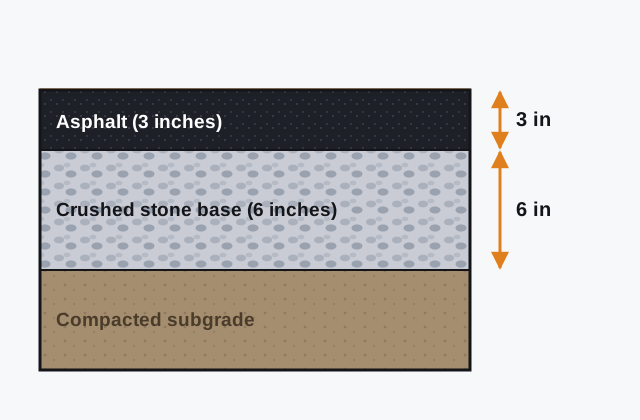
These are total installed costs for a new asphalt driveway at 3 inches compacted over a 6 to 8 inch crushed stone base. The range reflects regional differences in labor and material pricing across the US.
| Driveway size | Area | Installed cost range |
|---|---|---|
| Small single car (10 × 20) | 200 sq ft | $1,400 to $3,000 |
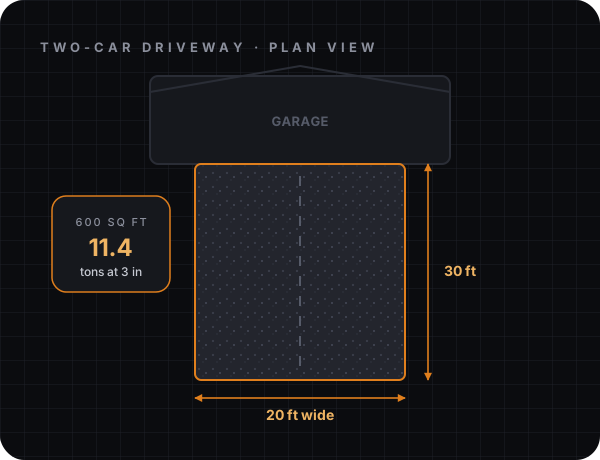
| Standard 2 car (20 × 30) | 600 sq ft | $4,200 to $9,000 |
| Wide 2 car (20 × 40) | 800 sq ft | $5,600 to $12,000 |
| Large (1,000 sq ft) | 1,000 sq ft | $7,000 to $15,000 |
| Long rural (12 × 100) | 1,200 sq ft | $8,400 to $18,000 |
| Extra large (2,000 sq ft) | 2,000 sq ft | $14,000 to $30,000 |
A 20x20 asphalt driveway, one of the most searched sizes, covers 400 square feet and typically costs $2,800 to $6,000 installed.
By thickness
Asphalt driveway cost by thickness
Thickness is the biggest lever you control. Going from 2 inches to 3 inches adds a few hundred dollars in material but extends the driveway's life by 5 to 8 years. Three inches is the residential standard for a reason.
Two inches is the bare minimum and wears faster under heavier vehicles. Four inches is worth the extra cost if you park trucks, trailers, or heavy equipment on the driveway regularly.
| Thickness | Material cost (800 sq ft) | Installed cost (800 sq ft) | Best for |
|---|---|---|---|
| 2 inches | $960 to $1,440 | $4,000 to $8,000 | Light traffic only, resurfacing overlays |
| 3 inches | $1,440 to $2,200 | $5,600 to $12,000 | Standard residential driveway |
| 4 inches | $1,960 to $2,920 | $7,200 to $14,400 | Heavy vehicles, trucks, trailers, RVs |
The method
How to calculate asphalt driveway cost
You do not need a calculator to get a rough number. Here is the method contractors use to build a quote, step by step.
- 1
Measure the driveway. Record the length and width in feet. For an L shaped or curved driveway, break it into simple rectangles, measure each section, and add them together.
- 2
Calculate the area. Multiply length by width. A 20 by 40 driveway is 800 square feet.
- 3
Estimate the asphalt tonnage. Multiply the area by the thickness in feet, then multiply by 145 pounds per cubic foot, and divide by 2,000 to get tons. At 3 inches (0.25 feet), that 800 sq ft driveway needs about 14.5 tons.
- 4
Price the material. Multiply tons by your local price per ton. At $125 per ton, 14.5 tons costs about $1,815 in material.
- 5
Add labor and base. Labor typically runs $2 to $5 per square foot, and a new crushed stone base adds $1 to $3 per square foot. For 800 sq ft, that is $1,600 to $4,000 for labor and $800 to $2,400 for base.
- 6
Add removal if replacing. Tearing out an old driveway adds $1 to $3 per square foot, or $800 to $2,400 for this example.
- 7
Total it up. Material + labor + base + removal (if applicable) = your installed estimate.
The calculator runs all seven steps the moment you enter your dimensions, including regional adjustments, so you get a single total without the arithmetic.
Project type
New install vs replacement vs resurfacing
The project type changes the price significantly. Resurfacing skips the base work, so it costs less. A full replacement includes demolition and disposal of the old surface.
| Project type | Cost per sq ft | What it includes |
|---|---|---|
| New installation | $7 to $15 | Grading, base layer, asphalt, compaction |
| Full replacement | $8 to $18 | Old driveway removal + disposal + new base + asphalt |
| Resurfacing (overlay) | $3 to $7 | New 1.5 to 2 inch asphalt layer over existing surface |
Resurfacing only works if the existing base is still solid. If there are deep cracks, potholes, or drainage failures underneath, a full replacement is the better investment because it fixes the root cause.
Price drivers
What factors affect asphalt driveway cost?
Seven things move your price up or down. Understanding them helps you spot a fair quote and avoid overpaying.
1. Driveway size and shape
Bigger driveways cost more total but often less per square foot, because the crew and equipment are already on site. Straight rectangles are the cheapest shape. L shapes need hand raking at the corners, and curves need precision rolling, both of which add labor time.
2. Asphalt thickness
Most residential driveways use 3 inches of compacted asphalt. Going to 4 inches adds roughly 30% more material. Two inches is the bare minimum and wears faster, especially under heavier vehicles like trucks or trailers.
3. Base preparation
A driveway is only as strong as the ground beneath it. Clay soil holds water and causes frost heave, so it needs a deeper gravel base (8 inches or more). Sandy soil drains well and often needs only 6 inches. If the existing ground is soft or slopes badly, grading and compaction add cost.
4. Asphalt type and mix
| Asphalt type | Cost per ton | Best for |
|---|---|---|
| Hot Mix Asphalt (HMA) | $100 to $150 | Standard driveways, most durable |
| Warm Mix Asphalt (WMA) | $110 to $160 | Cooler weather installs, lower emissions |
| Cold Mix | $80 to $120 | Patches and temporary repairs |
| Porous Asphalt | $120 to $180 | Driveways needing drainage |
| Recycled (RAP) | $10 to $55 | Budget work, lower durability |
Most driveway projects use hot mix. If your contractor offers recycled asphalt millings as a base layer, that can lower the base cost without hurting durability.
5. Old driveway removal
Tearing out and hauling away old asphalt adds $1 to $3 per square foot. If the old surface is concrete, removal costs more because concrete is heavier and harder to break up.
6. Regional labor rates
Labor is the biggest variable. Contractors in New York and California charge 40% to 60% more than those in Texas or the Southeast for the same job. The table below breaks it out by region.
7. Add-on features
Edging and bordering, drainage systems, parking line striping, tree root removal, and slope corrections all add to the total. They are worth it when they protect the driveway long term, but they should be itemized in your quote so you know exactly what you are paying for.
Regional
Asphalt driveway cost by region (2026)
Driveway pricing changes more by location than most homeowners expect. The difference comes down to labor market tightness, material transport distance, and local demand.
| Region | States | Installed cost per sq ft |
|---|---|---|
| Southeast | FL, GA, NC, SC, TN | $6 to $10 |
| South Central | TX, OK, AR, LA | $6 to $10 |
| Midwest | OH, MI, IL, IN, WI | $7 to $11 |
| Mid-Atlantic | PA, VA, MD, NJ | $8 to $13 |
| Mountain West | CO, AZ, NV, UT | $7 to $12 |
| Northeast | NY, MA, CT, RI | $9 to $15 |
| West Coast | CA, WA, OR | $10 to $16 |
Asphalt driveway cost in major US cities (standard 2 car, 800 sq ft)
| City | Installed cost |
|---|---|
| Houston, TX | $4,800 to $8,000 |
| Dallas, TX | $4,800 to $8,000 |
| San Antonio, TX | $4,800 to $8,000 |
| Atlanta, GA | $5,200 to $8,800 |
| Charlotte, NC | $5,200 to $8,400 |
| Nashville, TN | $5,200 to $8,800 |
| Columbus, OH | $5,600 to $9,200 |
| Indianapolis, IN | $5,600 to $9,200 |
| Detroit, MI | $5,600 to $9,600 |
| Minneapolis, MN | $6,000 to $10,000 |
| Phoenix, AZ | $5,600 to $9,600 |
| Denver, CO | $5,600 to $9,600 |
| Chicago, IL | $6,400 to $10,400 |
| Philadelphia, PA | $6,400 to $10,400 |
| Boston, MA | $7,200 to $12,000 |
| New York, NY | $7,200 to $12,000 |
| Miami, FL | $5,600 to $9,200 |
| Seattle, WA | $8,000 to $12,800 |
| Portland, OR | $7,600 to $12,000 |
| Los Angeles, CA | $8,000 to $12,800 |
Columbus, OH is shown as a mid-market benchmark. Get at least three local quotes to confirm pricing in your area.
Compare
Asphalt vs concrete vs gravel driveway cost
If you are still deciding on a surface, this comparison covers the three most common options side by side.
| Factor | Asphalt | Concrete | Gravel |
|---|---|---|---|
| Installed cost per sq ft | $7 to $15 | $8 to $18 | $2 to $6 |
| 800 sq ft driveway (installed) | $5,600 to $12,000 | $6,400 to $14,400 | $1,600 to $4,800 |
| Lifespan | 15 to 20 years | 25 to 30 years | Ongoing top-ups |
| Maintenance | Sealcoat every 3 to 5 years | Minimal | Regrade every 2 to 3 years |
| Cold climate | Excellent, flexes with freeze thaw | Can crack | Good drainage |
| Hot climate | Can soften in extreme heat | Excellent | Excellent |
| Best for | Budget paved option, cold regions | Long life, clean finish | Rural, long drives, tight budgets |
Asphalt is typically 20% to 30% cheaper than concrete to install for the same size driveway.
Over 20 years, the total cost of ownership (install plus maintenance) is roughly similar because asphalt needs sealcoating while concrete does not, but asphalt gives you a lower upfront hit.
Long term
20-year cost of ownership: asphalt vs concrete vs gravel
The install price is not the full picture. Maintenance, sealcoating, regrading, and eventual resurfacing add up. Here is what the same 800 sq ft driveway costs over 20 years across all three surfaces, using mid-range pricing.
| Year | What happens | Asphalt | Concrete | Gravel |
|---|---|---|---|---|
| 0 | Install | $5,600 to $12,000 | $6,400 to $14,400 | $1,600 to $4,800 |
| 1 | First sealcoat (asphalt) | $120 to $200 | $0 | $0 |
| 3 to 4 | Sealcoat / regrade | $120 to $200 | $0 | $400 to $800 |
| 6 to 8 | Sealcoat / regrade | $120 to $200 | $0 | $400 to $800 |
| 10 to 12 | Sealcoat / joint seal / regrade | $120 to $200 | $200 to $400 | $400 to $800 |
| 15 | Resurface (asphalt) / regrade (gravel) | $2,400 to $5,600 | $0 | $400 to $800 |
| 16 to 18 | Sealcoat / regrade | $120 to $200 | $0 | $400 to $800 |
| 20-year total | $8,720 to $18,600 | $6,600 to $14,800 | $4,000 to $12,600 |
Over 20 years, asphalt and concrete end up within 15% to 20% of each other. Gravel is cheapest overall but requires constant upkeep and does not add the same resale value to a property.
The takeaway: if your budget is tight at year 0, asphalt gives you a paved surface at a lower upfront hit. If you can pay more upfront and want lower long-term cost, concrete wins on total cost of ownership. If you have a long rural driveway and do not need a hard surface, gravel is the budget play.
Upkeep
Driveway maintenance costs after installation
The driveway cost does not end at installation. Budgeting for maintenance keeps the surface lasting its full 15 to 20 year lifespan and avoids an early replacement.
| Maintenance item | Typical cost | When |
|---|---|---|
| Sealcoating | $0.15 to $0.25 per sq ft | Every 3 to 5 years, starting 6 to 12 months after install |
| Crack filling | $1 to $3 per linear foot | As cracks appear |
| Pothole patching | $50 to $200 per patch | As needed |
| Full resurfacing | $3 to $7 per sq ft | After 10 to 15 years if base is still solid |
For an 800 sq ft driveway, plan about $120 to $200 every 3 to 5 years for sealcoating. Over 20 years, that adds roughly $600 to $1,200 to your total cost of ownership.
Timing
Best time to pave an asphalt driveway
Asphalt must be laid when the ground temperature is at least 50°F and rising. In most of the US, that limits the paving season to May through October. Timing your project within that window can save money.
Early season (May to June): Contractors are booking up but materials are fresh. You may lock in pricing before mid-summer demand peaks.
Peak season (July to August): Highest demand, longest wait times, and sometimes higher prices. Book early if you want a summer install.
Late season (September to October): Demand drops, and some contractors offer discounts to fill their schedule before winter. This is often the sweet spot for pricing, but do not push too late into fall or the asphalt may not cure properly before freezing temperatures hit.
Off season (November to April): Most paving stops in cold climates. In the South and Southwest, winter paving is possible on warmer days, and you may find lower prices.
Permits
Do you need a permit for an asphalt driveway?
Most municipalities do not require a permit to repave or resurface an existing driveway. A permit is usually needed only when you are installing a new driveway that changes drainage flow, alters the lot grading, or adds impervious surface area to a property with stormwater restrictions.
Check with your city or county building department before starting. The permit itself usually costs $50 to $200 and takes 1 to 2 weeks to process. Your contractor should know whether a permit is needed in your area, and many will handle the application as part of the job.
Two situations where a permit is almost always required: building a driveway where one did not exist before (new curb cut from the road), and widening an existing driveway beyond the property's impervious coverage allowance. Neither applies to a simple repave of the same footprint.
Save money
How to get the best price on driveway paving
These tips come from the patterns in real contractor quotes, not theory.
- Get at least three written quotes. Prices vary 30% to 50% between contractors for the same job. Three quotes give you a real range to compare.
- Ask each quote to itemize. Material, labor, base, removal (if applicable), and add-ons should each be a separate line. A single lump sum makes it impossible to compare.
- Check the base depth. If a quote seems too good to be true, look at the base thickness. Cutting the base from 8 inches to 4 inches lowers the price but shortens the driveway's life by years.
- Book in the shoulder season. Late spring or early fall often brings better pricing than peak summer.
- Ask about recycled asphalt millings. Using RAP as a base layer instead of virgin crushed stone can cut base costs by 20% to 40% without hurting performance.
- Skip the extras you do not need. Edging, colored asphalt, and decorative borders look nice but add $500 to $2,000. If budget matters, keep it simple.
Why this one
Why use this asphalt driveway cost calculator
- Full installed cost, not just material. Most asphalt calculators only give you tonnage. This one adds labor, base prep, and removal to show the real project cost.
- New, replacement, or resurfacing. Pick your project type and the tool adjusts the estimate automatically.
- Regional pricing built in. It factors in where you live so the number reflects your local market, not a national average that could be off by 40%.
- Side by side comparison. See asphalt vs concrete vs gravel costs for your exact driveway size before you commit.
- Add-on pricing. Toggle on drainage, edging, or sealcoating and see how each one moves the total.
- Free, instant, no signup. Enter your dimensions and get a result in seconds.
Pick your tool
Which calculator should you use?
One tool does not fit every job. Use this quick guide to jump to the right one.
- You want the full installed cost for a driveway with labor and base. You are on the right page. Enter your dimensions above.
- You just need tonnage and material cost, not installed. Use the main asphalt calculator on the homepage.
- You want to compare material prices by asphalt type and region. Use the asphalt cost per ton calculator.
- Your supplier quotes in square yards and you need to convert. Use the asphalt square yardage calculator.
- You are sizing a commercial parking lot, not a driveway. Use the asphalt parking lot calculator.
- Your job is standard hot mix and you want a mix-specific estimate. Use the hot mix asphalt calculator.
If the job crosses two of these, start here for the installed cost, then click into the specific calculator for the detailed material breakdown.
For site owners
Embed this calculator on your website (free)
Contractors, paving companies, and home improvement bloggers can add this driveway cost calculator to their own site with one line of code. It stays current with 2026 pricing and gives your visitors a real installed-cost estimate.
What you get: the full driveway cost calculator, mobile responsive, with a small "Powered by Asphalt Calculator" link back to getasphaltcalculator.com. No sign-up, no fee.
<iframe src="https://getasphaltcalculator.com/asphalt-driveway-cost-calculator/embed/" width="100%" height="780" frameborder="0" style="border:0;" title="Asphalt Driveway Cost Calculator"></iframe>FAQ
Frequently asked questions
14 questions answered
An asphalt driveway costs $7 to $15 per square foot fully installed in 2026. That includes the asphalt material, crushed stone base, grading, compaction, and labor. Material alone runs $3 to $5 per square foot. The wide range comes from differences in regional labor rates, site conditions, and driveway thickness.
A 20x20 asphalt driveway covers 400 square feet and typically costs $2,800 to $6,000 installed. The final price depends on your region, the base depth needed, and whether you are installing new or replacing an old surface. In lower cost markets like Texas or the Southeast, expect the lower end of that range.
A 1,000 square foot asphalt driveway costs $7,000 to $15,000 installed. Material alone for that size at 3 inches thick runs about $1,800 to $2,700, with labor and base prep making up the rest. Regional pricing matters: the same driveway costs roughly $7,000 in Houston and $12,000 in Los Angeles.
A 2,000 square foot asphalt driveway costs $14,000 to $30,000 installed. At that size, you are likely looking at a long rural driveway or a multi-car layout. The per square foot cost may come down slightly because the crew and equipment are on site for a longer job.
Yes. Asphalt typically costs 20% to 30% less than concrete to install. A standard 800 sq ft driveway runs $5,600 to $12,000 in asphalt versus $6,400 to $14,400 in concrete. However, concrete lasts 25 to 30 years with minimal maintenance, while asphalt lasts 15 to 20 years and needs sealcoating every 3 to 5 years. Over 20 years, the total cost of ownership is roughly similar.
Resurfacing costs $3 to $7 per square foot and adds a new 1.5 to 2 inch layer over the existing surface. A full replacement costs $8 to $18 per square foot because it includes tearing out the old driveway, disposing of the debris, rebuilding the base, and laying new asphalt. Resurfacing only works if the existing base is structurally sound.
Multiply the length by the width to get the area in square feet, then multiply by your regional installed cost per square foot ($7 to $15). For a more detailed estimate, calculate the asphalt tonnage separately (area times thickness in feet times 145, divided by 2,000), price the material, then add labor ($2 to $5 per sq ft) and base ($1 to $3 per sq ft).
Seven main factors: driveway size and shape, asphalt thickness, base preparation needs, asphalt type (hot mix, warm mix, recycled), old driveway removal, regional labor rates, and add-on features like drainage and edging. Of these, regional labor rates cause the biggest swing, with Northeast and West Coast prices running 40% to 60% above the South and Midwest.
Sealcoating costs $0.15 to $0.25 per square foot, or about $120 to $200 for a standard 800 sq ft driveway. It should be applied every 3 to 5 years, starting 6 to 12 months after a new install to let the oils in the asphalt cure first. Sealcoating protects the surface from water, UV, and oil damage and extends the driveway's life.
Late spring (May to June) or early fall (September to October) are the best windows. Asphalt needs a ground temperature of at least 50 degrees Fahrenheit to cure properly, so the paving season runs May through October in most of the US. Late season often brings better pricing because contractor demand drops before winter.
Quotes vary 30% to 50% because contractors differ on base depth, asphalt thickness, crew size, overhead, and how busy they are. A low quote may cut the base from 8 inches to 4 inches, which saves money now but shortens the driveway's life. Always ask each contractor to itemize material, labor, base, and removal so you can compare line by line.
Yes. Going from 2 inches to 3 inches adds about 50% more asphalt material. Going to 4 inches adds roughly 100% more than 2 inches. Most residential driveways need 3 inches minimum. Two inches is the bare floor and wears faster, especially under heavier vehicles. The extra inch costs a few hundred dollars but adds years of life.
A 4 inch asphalt driveway costs $9 to $18 per square foot installed in 2026, roughly 30% more than a standard 3 inch driveway. For an 800 sq ft driveway, that is $7,200 to $14,400. Four inches is recommended for driveways that will carry heavy vehicles like trucks, trailers, or RVs on a regular basis.
Most municipalities do not require a permit to repave or resurface an existing driveway. A permit is usually needed only when installing a new driveway that changes drainage, alters lot grading, or adds impervious surface area. The permit typically costs $50 to $200 and takes 1 to 2 weeks to process. Check with your city or county building department before starting.
Enter your driveway dimensions above and see your full installed cost in seconds, with material, labor, and base broken out. Free, no signup.
Every number on this page follows the methodology documented on our About page: 145 lb/ft³ density per the Asphalt Institute MS-2 standard, facts cross-checked against the National Asphalt Pavement Association. Found an error? Email hello@getasphaltcalculator.com.
Last updated July 12, 2026.