Free · No signup · Feet or meters

Asphalt Calculator

Find out exactly how much asphalt you need, in tons, cubic yards, and total cost, in seconds. Free to use, no signup, and it works for driveways, parking lots, roads, and repair patches. Enter your length, width, and thickness, and get a clear estimate before you call a single supplier.

Instant tons and cost · Works in feet or meters · Every number sourced · Updated July 2026

Calculate asphalt tonnage & cost

Right in the standard range for residential driveways.

Live preview

Plan view · to scale

Cross-section

3.0 in asphalt

Asphalt
Subgrade

Asphalt needed

0.0

tons · incl. 5% waste

Volume

0.0

cu yd (100 ft³)

Estimated cost

enter price per ton

At 3.0 in, 1 ton covers about 55 ft².

Estimate only. Actual needs vary with compaction, waste, and site conditions.

Recommended asphalt thickness by project type
ProjectRecommended thickness
Thin overlay / top coat1–2 in
Residential driveway3 in
Heavy driveway / light lot4 in
Commercial lot, truck traffic6 in+

The basics

What is an asphalt calculator?

An asphalt calculator estimates how much asphalt you need for a paving job. You enter the length, width, and thickness of your area, and it returns the volume in cubic yards, the weight in tons, and the material cost. It works for driveways, parking lots, roads, and pothole repair.

Getting the number right matters. Order too little and your crew stops mid pour. Order too much and you pay for asphalt that gets hauled away. This tool gives you a solid figure so you can budget, compare supplier quotes, and avoid both.

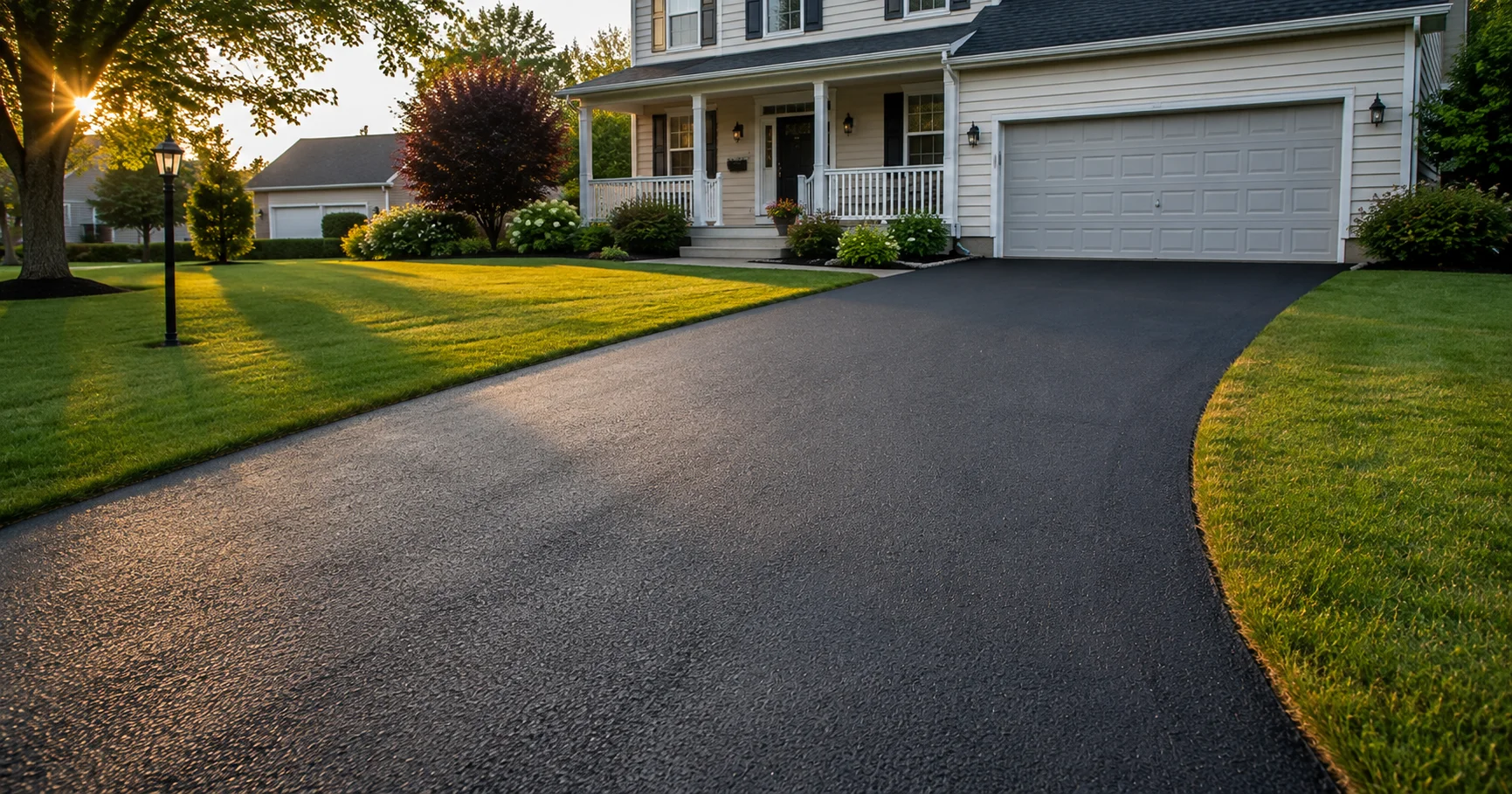
Asphalt is the most common paving material in the country, from highway lanes to the driveway in front of your house.

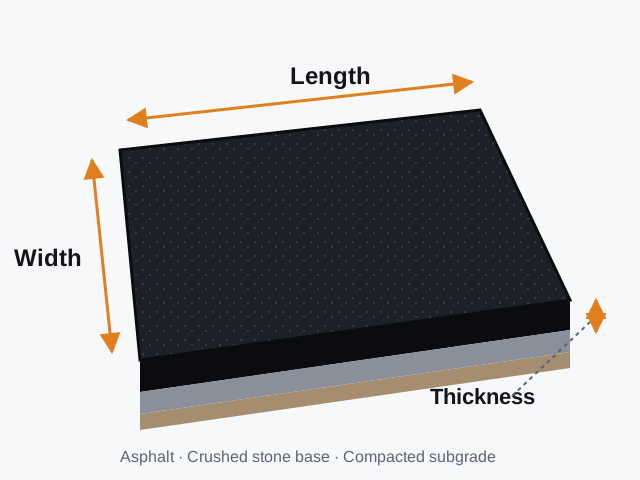
Diagram showing length, width, and thickness measurements of an asphalt driveway to calculate tonnage
Roughly 94% of paved roads in the United States are surfaced with asphalt.
Source: National Asphalt Pavement Association

Step by step

How much asphalt do I need?

To find how much asphalt you need, multiply length by width by thickness to get the volume, then multiply the volume by the density of asphalt to get the weight. Most hot mix asphalt weighs about 145 pounds per cubic foot, so a 10 foot by 20 foot driveway at 3 inches thick needs roughly 3.6 tons.

How to calculate asphalt step by step

  1. 1

    Measure the area

    Record the length and width in feet. For an odd shape, break it into simple rectangles, measure each one, and add them together.

  2. 2

    Pick your thickness

    Most residential driveways use 3 inches of compacted asphalt. Parking lots and heavier traffic use 4 inches or more.

  3. 3

    Convert thickness to feet

    Divide the inches by 12. So 3 inches becomes 0.25 feet.

  4. 4

    Find the volume

    Multiply length times width times thickness in feet. A 10 by 20 driveway at 0.25 feet is 50 cubic feet.

  5. 5

    Convert to tons

    Multiply the cubic feet by 145 pounds, then divide by 2,000. That 50 cubic feet becomes 7,250 pounds, or about 3.6 tons.

  6. 6

    Add a waste allowance

    Add 5% to 10% for compaction and spillage so you do not come up short.

The calculator does all six steps the moment you type your numbers in, including the waste allowance, so you get tons, cubic yards, and cost together.

Run my numbers ↑

The math

The asphalt formula (the math behind the tool)

Volume (cubic feet) = length (ft) × width (ft) × thickness (ft)

Weight (tons) = (volume × 145 lb per cubic foot) ÷ 2,000

Real density runs from about 142 to 148 pounds per cubic foot depending on the mix design (Superpave, Marshall, or a state DOT specification) and how well the layer is compacted, so 145 is the accepted middle value used across the paving industry. If you know the exact density of the mix your supplier sells, you can enter it in the tool for a tighter estimate.

A quick note on mix design. Modern hot mix asphalt in the US is usually designed under Superpave, developed by the Strategic Highway Research Program. The binder is graded by Performance Grade (PG), for example PG 64-22, which describes the temperature range the binder holds up in. Your supplier will name the mix and PG grade on the ticket. Match that grade to your climate for the longest life.

The industry standard density for compacted hot mix asphalt is 145 pounds per cubic foot.
Source: Asphalt Institute, MS-2 Asphalt Mix Design Methods

Metric quick reference (for anyone working in meters and tonnes)

If you measure in meters instead of feet, use the same formula with metric density: volume (m³) × 2,322 kg per m³ = weight in kilograms, then divide by 1,000 for tonnes. A 3 meter by 6 meter driveway at 75 mm thick needs about 3.14 tonnes of hot mix asphalt. The calculator switches to metric with one toggle, so you do not have to convert by hand.

Coverage

How many square feet does 1 ton of asphalt cover?

One ton of hot mix asphalt covers about 83 square feet at 2 inches thick, or about 55 square feet at 3 inches thick. Coverage drops as thickness goes up, because a thicker layer uses more material over the same area. The table below shows the coverage for common driveway and lot thicknesses, based on 145 pounds per cubic foot.

ThicknessCoverage per tonCommon use
1 inchabout 165 sq ftThin overlay, top coat
2 inchesabout 83 sq ftLight residential, resurfacing
3 inchesabout 55 sq ftStandard driveway
4 inchesabout 41 sq ftHeavy driveway, light parking lot
6 inchesabout 28 sq ftCommercial lot, truck traffic
At 3 inches compacted, one ton of hot mix asphalt covers about 55 square feet.

Read it the other way when you plan a job. A 550 square foot driveway at 3 inches needs about 10 tons, since one ton covers roughly 55 square feet at that depth.

Pricing

How much does asphalt cost?

Hot mix asphalt typically costs $100 to $150 per ton in 2026, though the price moves with crude oil and changes by region and how far the material has to travel from the plant. Cold mix for patching and specialty mixes can cost more. The calculator turns your tonnage into a material cost the moment you enter a price per ton.

Asphalt cost by driveway size

These figures cover the asphalt material only, at 3 inches compacted, using a mid range price of $100 to $150 per ton. They do not include labor, base preparation, or delivery, which vary by contractor and site.

Driveway sizeApprox. areaAsphalt neededMaterial cost
Small (10 × 20)200 sq ftabout 3.6 tons$360 to $540
2 car (20 × 20)400 sq ftabout 7.3 tons$725 to $1,090
Wide (20 × 40)800 sq ftabout 14.5 tons$1,450 to $2,175
Large (1,000 sq ft)1,000 sq ftabout 18 tons$1,810 to $2,720
Extra large (2,000 sq ft)2,000 sq ftabout 36 tons$3,630 to $5,440

Asphalt cost by US region

Prices vary by region because plants are not evenly spread and hauling distance is expensive. The table below is a working 2026 range based on published supplier quotes and industry reports. Our own survey (see the price index section below) will replace these figures with fresh, verified numbers.

US regionTypical range per ton (2026)Notes
Northeast$110 to $160Higher labor and short paving season
Mid-Atlantic$105 to $145Steady demand from municipal work
Southeast$95 to $135Long paving season, competitive supply
Midwest$100 to $140Freeze thaw drives more repave work
Great Plains$105 to $145Longer hauling distances in rural areas
Southwest$100 to $140Heat-graded binders add cost
Mountain West$115 to $165Remote plants, limited paving window
Pacific Northwest$110 to $155Rainy season shortens jobs
California$115 to $170Strict CalTrans specs and emissions rules
Alaska and Hawaii$180 to $260Shipping and limited supply

Cost by asphalt type

Different mixes cost different amounts. Hot mix is the standard; specialty mixes cost more per ton but suit specific jobs.

Asphalt typeTypical cost per ton (2026)Best use
Hot Mix Asphalt (HMA)$100 to $150New driveways, parking lots, roads
Warm Mix Asphalt (WMA)$105 to $155Cooler weather jobs, lower emissions
Cold Mix Asphalt$130 to $200Pothole and small repair patches
Porous Asphalt$150 to $220Drainage-heavy lots and drives
Recycled (RAP mix)$80 to $120Budget residential paving

Installed cost, with labor and base included, usually runs higher than the material alone. For a full installed estimate on a driveway, use our asphalt driveway cost calculator.

Delivery

How much does asphalt delivery cost?

Asphalt delivery typically costs $2 to $5 per mile from the plant, with a common minimum charge of $75 to $150 per load. A truckload holds about 20 to 25 tons, so on a residential job the delivery is often bundled with the material price. Expect delivery to add $150 to $400 on a standalone material purchase, more if you are outside the plant's normal service radius.

The calculator has a delivery field so you can add your quoted delivery cost and see the true total for the job.

Rule of thumb #1

Ask the supplier for a delivered price per ton, not just the ton price at the plant, so you can compare quotes on the same basis.

Rule of thumb #2

Confirm the truck type and turning radius. A 22 ton dump truck needs room to back in and dump. If your driveway is tight, ask for a smaller truck or plan on a wheelbarrow transfer.

Materials

Types of asphalt (and which one you need)

The mix you choose changes the weight, the cost, and how long the surface lasts. Here is a plain comparison.

The standard

Hot Mix Asphalt (HMA)

New driveways, parking lots, roads

The standard. Most durable, laid hot, cures fast

Warm Mix Asphalt (WMA)

Cooler weather jobs

Made at a lower temperature, lower emissions

Cold Mix Asphalt

Pothole and crack repair

No heating needed, easy to apply, less durable

Porous Asphalt

Lots and drives needing drainage

Lets water pass through the surface

Recycled (RAP)

Budget residential work

Uses reclaimed asphalt, lower cost

Most homeowners paving a driveway use hot mix. If your whole job is hot mix, our hot mix asphalt calculator gives you a mix specific estimate. If you are filling a pothole yourself, cold mix in a bag is the simpler choice.

Under the asphalt

How much base material do I need under asphalt?

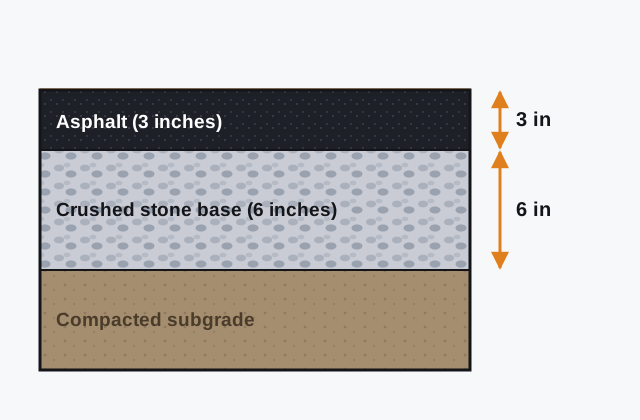
A residential asphalt driveway needs a compacted crushed stone base of 4 to 8 inches, with 6 inches being the safe middle for most sites. Commercial lots and truck-traffic driveways often use 8 to 12 inches. The base carries the load, so under-building here is where most driveways fail early.

  1. Use the same length and width as the asphalt layer.
  2. Pick your base depth in inches (usually 4, 6, or 8).
  3. Multiply length × width × depth (in feet) to get cubic feet.
  4. Convert to tons at about 100 pounds per cubic foot for crushed stone: cubic feet × 100 ÷ 2,000.

A 20 by 20 driveway at 6 inches of crushed stone base needs about 10 tons of stone. The calculator has a base toggle that computes this alongside the asphalt tonnage, so you can price the whole job in one screen.

Base material types. Class 5 or Class 2 aggregate, or a locally graded crushed stone specified as "3/4 minus" or "dense-graded aggregate base course" (DGABC), all work. Your state DOT spec sheet lists the exact grade for road work; homeowners can use the supplier's standard base grade.

Cross section of an asphalt driveway showing 3 inch asphalt over 6 inch crushed stone base on compacted subgrade

Lifespan

How long does an asphalt driveway last?

A well built asphalt driveway lasts 15 to 20 years in most US climates, and up to 30 years with strong maintenance. Life depends on four things: mix quality, base preparation, drainage, and sealcoat schedule. Skip any one of those and the surface shortens fast.

Mix quality

Hot mix from a reputable plant beats bag-mix every time.

Base

A 4 to 8 inch compacted crushed stone base carries the load. Under-built base is the top failure cause.

Drainage

Water pooling on or under the asphalt breaks it down. Slope the surface at least 1/4 inch per foot away from structures.

Sealcoat

Seal every 3 to 5 years to protect the binder from UV and water.

When should I sealcoat my asphalt driveway?

Sealcoat a new asphalt driveway 6 to 12 months after installation, once the surface has cured. After that, resealing every 3 to 5 years keeps the binder protected and slows cracking. Sealcoating too early can trap oils in the fresh asphalt and cause soft spots.

Signs it is time to sealcoat again: color has faded from black to gray, fine surface cracks are showing, or water no longer beads on the surface. A quality sealcoat runs $0.15 to $0.30 per square foot applied, or $300 to $600 for a typical 2,000 sq ft driveway.

Compare

Asphalt vs concrete vs gravel (full comparison)

If you are still choosing a surface, this is the complete comparison across 12 factors that actually matter for a residential driveway. Asphalt sits in the middle on price and installs the fastest.

FactorAsphaltConcreteGravel
Material cost per sq ft$2 to $5$4 to $8$1 to $3
Installed cost per sq ft$7 to $13$10 to $20$1 to $3
Install time1 to 2 days1 to 3 days plus curingSame day
Cure to full use24 to 72 hours7 days minimum, 28 to full strengthInstant
Lifespan15 to 20 years, up to 30 with care25 to 30 yearsOngoing top-ups
Freeze thaw performanceFlexes with the ground, holds up wellCracks in hard freeze thaw cyclesBest performer
Hot climate performanceSoftens in extreme heatExcellentExcellent
MaintenanceSealcoat every 3 to 5 yearsSealer optional; joint work neededAnnual grading, top-up
Repair costLow (patch or overlay)High (cut and replace slab)Very low
DIY difficultyHard (needs hot material)Very hardEasy
Resale value impactModerate positiveHigher positiveNeutral or negative
Best forCold climates, fast install, budgetHot climates, long life, low maintenanceRural, long drives, tight budgets

Asphalt flexes with freeze and thaw cycles, which is why it holds up well in northern states where concrete tends to crack. Concrete wins on long-term durability and hot weather. Gravel wins on upfront cost and is common on rural properties where a hard surface is not required.

Why this one

Why use this asphalt calculator

Tons, yards, and cost together

Most tools give you one number. This one shows volume in cubic yards, weight in tons, and total material cost in the same result.

Built in waste allowance

It adds a compaction and waste factor automatically, so your order accounts for real world loss. Ordering short means a second delivery fee of $150 to $400 and a stalled crew.

Any unit, any shape

Enter feet or meters, and handle rectangles, circles, and custom areas without doing the geometry yourself.

Base material included

Toggle on a crushed stone base and the tool estimates that tonnage too, so you can price the whole job.

Show the math

Expand the result to see every number used, from your inputs to the final ton value. Nothing hidden. Good for contractor quotes and for teaching yourself the math.

Every number sourced

The density values follow the Asphalt Institute MS-2 standard, the cost ranges are cross-referenced against published supplier quotes, and you can check our methodology on the About page.

Free, no signup, no app

It runs in your browser on your phone or laptop. No accounts, no email walls, no locked features.

Pick your tool

Which calculator should you use?

One tool rarely covers every job. Use this quick guide to jump to the right one.

If the job crosses two of these (for example, you are pricing a lot AND checking a per-ton quote), start with this main calculator, then click into the specific one.

For site owners

Embed this calculator on your website (free)

Contractors, paving suppliers, and home improvement bloggers can add this calculator to their own site with one line of code. It stays up to date, does not need maintenance, and gives your visitors a real estimating tool.

One line install
<iframe src="https://getasphaltcalculator.com/embed/" width="100%" height="720" frameborder="0" style="border:0;" title="Asphalt Calculator"></iframe>

What you get

The full calculator, mobile responsive, with a small "Powered by Asphalt Calculator" link back to this page. No sign-up, no fee, no tracking beyond standard page analytics.

Why we let anyone embed it

The more sites use it, the more useful it becomes and the faster we improve it. If you embed it and want a custom color match to your site, email hello@getasphaltcalculator.com and we will send a themed version.

Original data

Original data: 2026 US asphalt price index

Most asphalt pricing pages quote a national range and call it a day. That is not useful if you are pouring a driveway in Michigan and your supplier quotes 20% higher than the national number. We are building a state and region by region index of what hot mix, warm mix, cold mix, and recycled asphalt actually cost this year, based on a quarterly survey of US suppliers.

The first edition is live at Asphalt Price Index once the survey round closes. Until then, the regional table above carries our working ranges from published supplier quotes and industry reports.

We update this quarterly. If you are a supplier and want to be included in the next round, email hello@getasphaltcalculator.com.

FAQ

Frequently asked questions

Direct answers to the questions people ask most about estimating asphalt.

To find how much asphalt you need, multiply length by width by thickness in feet to get the volume, then multiply by 145 pounds per cubic foot and divide by 2,000 to get tons. A 10 foot by 20 foot driveway at 3 inches needs about 3.6 tons. Add 5% to 10% for waste and compaction.

A standard 2 car driveway of about 400 square feet at 3 inches thick needs roughly 7.3 tons of hot mix asphalt. Larger driveways scale up from there, so an 800 square foot drive needs about 14.5 tons. Enter your exact size in the calculator for a precise figure.

One ton of asphalt covers about 83 square feet at 2 inches thick, about 55 square feet at 3 inches, and about 41 square feet at 4 inches. Coverage falls as thickness rises, because a deeper layer uses more material over the same area.

A ton of hot mix asphalt typically costs $100 to $150 in 2026. The price shifts with crude oil, region, and how far the material travels from the plant. Cold mix and specialty mixes can cost more. Ask two or three local suppliers for a current delivered price per ton.

A residential asphalt driveway should be at least 3 inches of compacted asphalt over a 4 to 8 inch crushed stone base. Cold climates and heavier vehicles call for 4 inches or more. Parking lots with truck traffic often use 6 inches or more.

Asphalt tonnage equals length times width times thickness in feet, multiplied by 145 pounds per cubic foot, then divided by 2,000. The 145 figure is the standard weight of one cubic foot of compacted hot mix asphalt. Adjust the density if your supplier gives you a different value.

To convert square yards to tons, first find the area in square feet by multiplying square yards by 9, then multiply by the thickness in feet and by 145 pounds, and divide by 2,000. At 2 inches thick, one square yard of asphalt weighs about 0.24 tons.

Compacted hot mix asphalt weighs about 145 pounds per cubic foot, with real values ranging from roughly 142 to 148 depending on the mix and compaction. A cubic yard, which is 27 cubic feet, weighs close to 3,915 pounds, or just under 2 tons.

A well built asphalt driveway lasts 15 to 20 years in most US climates, and up to 30 years with strong maintenance. Life depends on mix quality, base preparation, drainage, and sealcoat schedule. Under-built base is the top failure cause on residential driveways.

Asphalt delivery typically costs $2 to $5 per mile from the plant, with a common minimum charge of $75 to $150 per load. On a residential job the delivery is often bundled with the material price. Expect delivery to add $150 to $400 on a standalone material purchase.

You can walk on new asphalt after 24 hours and drive a passenger car after 3 days in normal weather. Wait a full 7 to 14 days before parking heavy vehicles or turning the wheels while stopped, because fresh asphalt scars easily. Full cure to maximum strength takes 30 days.

Asphalt and blacktop are the same paving material with different names. Blacktop is a common name for hot mix asphalt used on driveways and small paving jobs. The technical term for the material is asphalt concrete, and it uses a bitumen binder mixed with aggregate. All three terms refer to the same product.

Stop guessing your material order

Enter your length, width, and thickness above and get your asphalt tonnage and cost in seconds, free.

About this calculator. Built by the team at StackAura. Every number on this page is sourced: density values follow the Asphalt Institute MS-2 standard, the 94% roads figure comes from the National Asphalt Pavement Association, and cost ranges are cross-referenced against published supplier quotes. Read more about how we research and who built this tool.

Last updated July 12, 2026.

From the blog

Asphalt guides & cost data

View all →