Asphalt driveway sealcoating costs $150 to $450 for most residential driveways in 2026. On a driveway big enough to be billed by area, that is roughly $0.20 to $0.30 per square foot. Below about 800 square feet it usually is not: a $150 to $200 minimum charge sets the price. On a two-car driveway that means about $50 to $105 of sealer inside a $175 to $325 quote. Which is why published averages for this job range from $110 to $500 for the same driveway.
At a glance: sealcoating cost in seven numbers
- 1$150 to $450 — what most residential driveways cost to sealcoat in 2026, two coats, light preparation, no major crack repair.
- 2$0.20 to $0.30 per sq ft — the rate that governs once a driveway is past roughly 800 square feet. Under that, the minimum charge governs instead.
- 3$150 to $200 — the published minimum job charge. On a two-car driveway this is usually the whole quote.
- 4$0.13 to $0.26 per sq ft — what the sealer itself costs for two coats, calculated from the published application rate at real 2026 material prices.
- 5$18 to $65 — the retail price of a consumer 5-gallon pail. Commercial concentrate runs $8 to $15 a gallon bought by the drum or tote.
- 637 to 56 sq ft — what one gallon of sealer concentrate actually covers under the two-coat specification, against label claims of 100 sq ft and up.
- 72 to 5 years — how long the Asphalt Institute says a well-built driveway should go before it needs sealing at all.
How much does asphalt driveway sealcoating cost?
Sealcoating an asphalt driveway costs $150 to $450 for most homes in 2026, covering two coats, sweeping and blowing the surface clean, and filling ordinary cracks. Large or badly weathered driveways run higher, and the table below gives the range by size. These are contractor and aggregator figures rather than government data, so treat them as planning numbers and get three local quotes before you commit.
| Driveway | Area | Typical sealcoat quote | Works out to |
|---|---|---|---|
| 1 car, 10 × 20 ft | 200 sq ft | $150 to $250 | $0.75 to $1.25 / sq ft |
| 2 car, 20 × 20 ft | 400 sq ft | $175 to $325 | $0.44 to $0.81 / sq ft |
| 1 car long, 12 × 40 ft | 480 sq ft | $175 to $350 | $0.36 to $0.73 / sq ft |
| 2 car long, 20 × 40 ft | 800 sq ft | $200 to $450 | $0.25 to $0.56 / sq ft |
| Wide, 24 × 50 ft | 1,200 sq ft | $275 to $600 | $0.23 to $0.50 / sq ft |
| Large, 30 × 60 ft | 1,800 sq ft | $400 to $850 | $0.22 to $0.47 / sq ft |
| Very large, 40 × 80 ft | 3,200 sq ft | $650 to $1,500 | $0.20 to $0.47 / sq ft |
Read the right-hand column before anything else. The cost per square foot falls by more than half across that table without the work changing at all. The sealer, the crew and the method are the same at 200 square feet as at 3,200. Only the arithmetic moves, because a fixed cost is being divided by a bigger number.
Why every published sealcoating price per square foot is different
Search this question and you will be told sealcoating costs $0.08 per square foot, and $1.50 per square foot, and several things in between. Both extremes are quoted honestly by people who know the trade. They disagree because they are describing different jobs, and because per-square-foot pricing does not behave the way people assume it does.
What one 600 sq ft driveway costs, by published source
Four and a half times between the cheapest and the dearest account of the same driveway. Three things explain nearly all of it.
- Coat count. The Colorado Asphalt Pavement Association specifies two coats over the whole surface, with a third only in high-traffic areas. A one-coat job uses half the material and takes most of a day off the schedule. It is a legitimate cheaper product, not a scam, but it is not the same product.
- Who is being surveyed. Trade sources such as PavemanPro publish the rate a contractor charges for area. Aggregators publish what homeowners reported paying for a whole job, and homeowners overwhelmingly have small driveways where the minimum charge, not the area, sets the price.
- How old the figure is. Inch Calculator, which ranks near the top of this search, carries a page last updated in July 2023. Sealer prices have moved since.
None of those are bad-faith numbers. They are simply not comparable, and averaging them produces a figure that describes no real driveway.
The minimum charge, not the square footage, sets the price on most driveways
Most residential sealcoating is priced by the visit, not by the area. Yelp, working from 286 real contractor quotes, puts the minimum job charge at $150 to $200, and V&F Paving publishes a flat $200 minimum per address. On any driveway small enough to be sealed in an afternoon, that minimum is the entire quote. The square footage never enters the calculation.
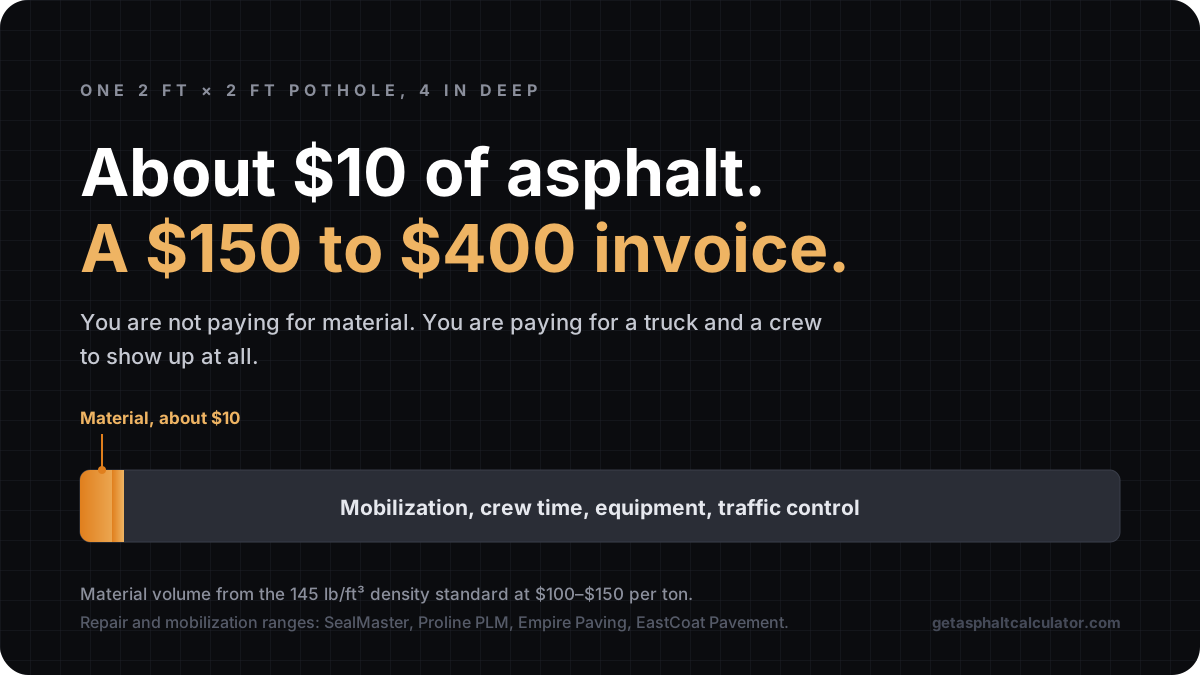
The reason is the same one that makes a single pothole repair cost more per square foot than paving a whole driveway. A crew has to load a tank, drive to your house, mask the garage apron and the edges, and lose the truck for half a day. That cost exists whether you have 200 square feet or 900. Our guide to pothole repair cost works the same arithmetic through in more detail.
What a sealcoat works out to per 100 sq ft, by driveway size (sq ft)
The curve flattens at about 800 square feet. Below that point you are buying a visit and the driveway size is close to irrelevant. Above it you are buying area, and comparing quotes per square foot starts to mean something.
What the sealer in that quote actually costs
The sealer itself is $0.13 to $0.26 per square foot for two coats. On a typical 600 sq ft driveway that is $78 to $156 of material inside a $200 to $450 quote. Everything else is the visit, the crew, the equipment and the contractor's margin.
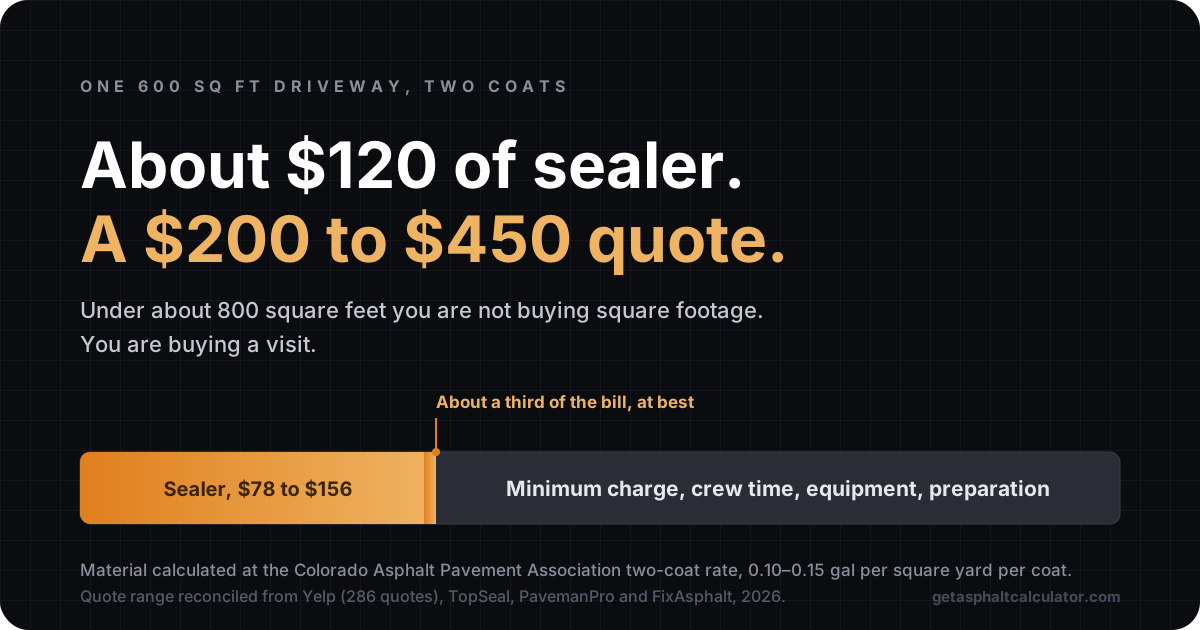
That figure is not a survey. It is calculated from the published specification. The Colorado Asphalt Pavement Association's seal coat best practices set the rate. They call for 0.10 to 0.15 gallons of mixed sealer per square yard, per coat, with two coats in all areas. Water is added at 20 to 30 percent of the concentrate. Run that through:
- 0.10 to 0.15 gal per square yard ÷ 9 = 0.011 to 0.017 gal per sq ft, per coat
- Two coats = 0.022 to 0.033 gal of mixed sealer per sq ft
- At 25% water, concentrate = 0.018 to 0.027 gal per sq ft
- Which means one gallon of concentrate covers 37 to 56 sq ft of finished, two-coat driveway
| How the sealer is bought | Price per gallon | Material cost per sq ft, two coats |
|---|---|---|
| Consumer pail, 4.75 gal at Home Depot | $7.36 | $0.13 to $0.20 |
| Consumer pail, 3 or more | $6.26 | $0.11 to $0.17 |
| Commercial 275-gallon tote | $8.76 | $0.16 to $0.23 |
| Commercial 55-gallon drum | $9.69 | $0.17 to $0.26 |
| Commercial 5-gallon pail | $21.80 | $0.39 to $0.58 |
Two things are worth noticing in that table. Bought by the tote, a contractor's sealer costs about the same per gallon as a homeowner's at Home Depot. There is no bulk-buying advantage to hand back to you in the quote. And commercial 5-gallon pails are the most expensive way to buy sealer by a wide margin. Nobody seals a driveway out of them.
Why the coverage on the pail is not the coverage you get
Label coverage figures are single-coat figures on smooth asphalt, and they overstate the real job by roughly half. A pail claiming 400 to 500 square feet covers about 190 to 280 square feet of driveway. That is what happens once you apply both coats. Henry publishes 200 to 500 square feet per 5-gallon pail depending on surface, which is honest about the spread but still describes a coat, not a job.
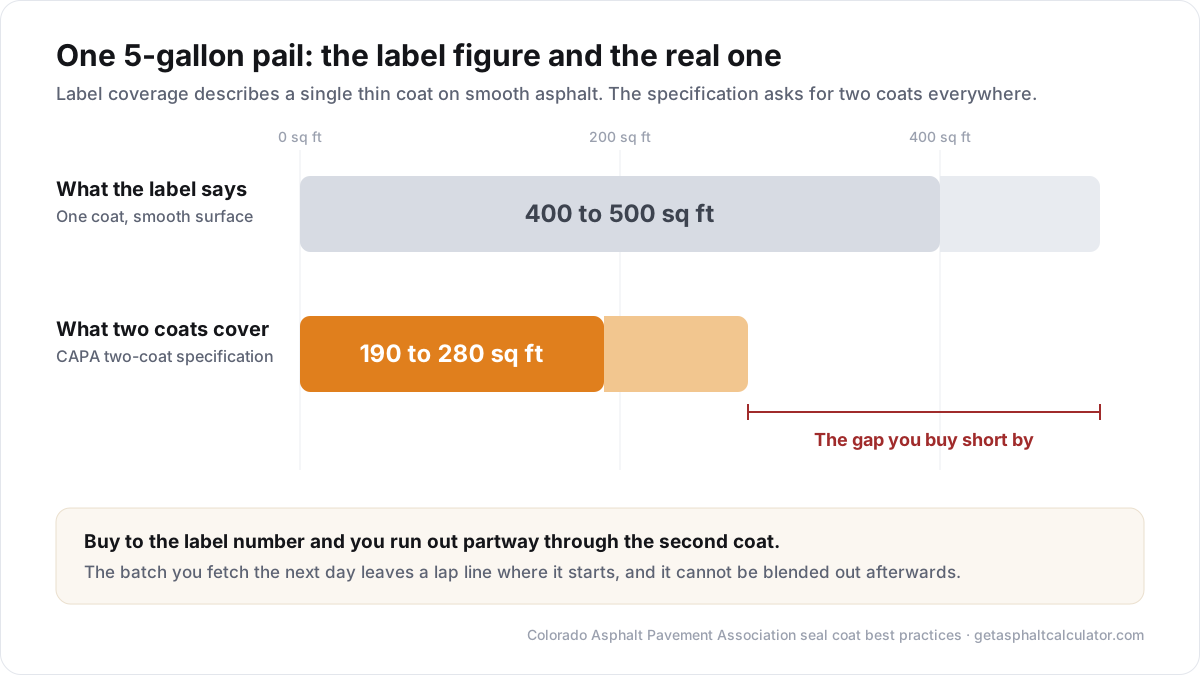
This is the single most common way a DIY sealcoating budget goes wrong. You buy to the label number and run out partway through the second coat. The batch you buy the next day leaves a visible lap line that cannot be blended out. Buy for two coats, and buy the extra pail.
It also quietly explains part of the price spread above. A contractor pricing off a label coverage figure is pricing a one-coat job whether they intend to or not.
How much to sealcoat a 2,000 sq ft driveway?
A 2,000 square foot driveway costs $400 to $800 to sealcoat professionally in 2026, and about $350 to $450 in materials to do yourself. At this size you are firmly past the minimum charge, so area governs and the per-square-foot rate is meaningful.
The material side, worked through under the two-coat specification at the average application rate:
- 2,000 sq ft ÷ 9 = 222 square yards
- 222 × 0.125 gal per SY × 2 coats = 55.6 gallons of mixed sealer
- At 25% water: 55.6 ÷ 1.25 = 44.4 gallons of concentrate
- ÷ 4.75 gal per consumer pail = 9.4, so buy 10 pails
- 10 × $34.97 = $350 in sealer, or $297 at the three-or-more price
- Sand at 300 lb per 100 gallons of concentrate = 133 lb
| Line item | Do it yourself | Hire a contractor |
|---|---|---|
| Sealer, two coats | $300 to $350 | included |
| Silica sand | $20 to $40 | included |
| Crack filler | $30 to $80 | $1 to $3 per linear foot |
| Squeegee, brush, tape, gloves | $40 to $80 | — |
| Pressure washer rental, if needed | $50 to $120 per day | included |
| Labor | 8 to 12 hours, two people | — |
| Total | $440 to $670 | $400 to $800 |
The result most people do not expect
At 2,000 square feet, doing it yourself saves very little. The tools are one-off, so a second sealing is cheaper, but the first one costs about what a contractor charges and takes two people a weekend. DIY wins decisively at the small end, where a $200 minimum charge buys $50 to $105 of sealer, and loses ground steadily as the driveway grows.
How much does a 5 gallon bucket of asphalt sealer cost?
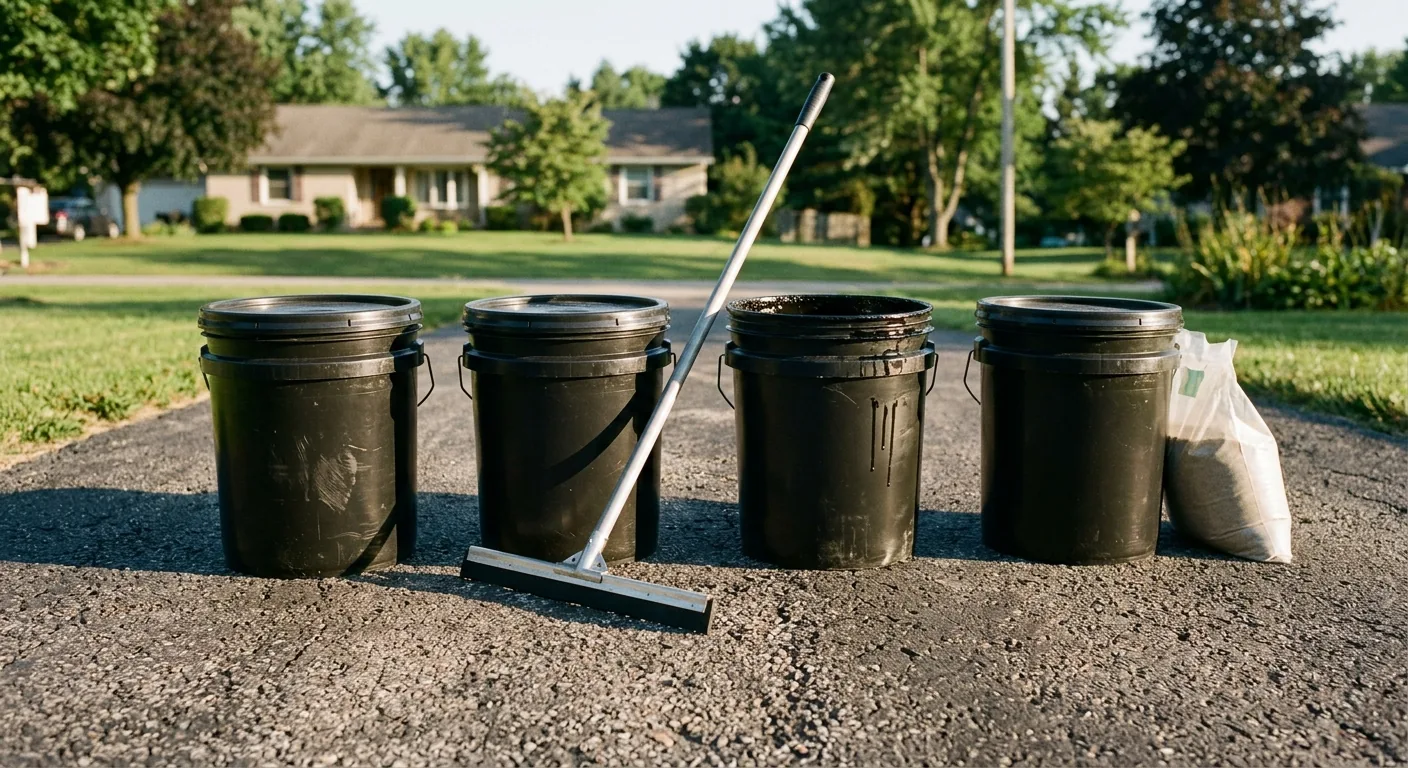
A 5-gallon pail of driveway sealer costs $18 to $65 at retail in 2026, with the mainstream consumer products clustered around $30 to $40. Commercial-grade concentrate is a different market. Sold by the drum or tote it works out to $8 to $15 a gallon. A commercial 5-gallon pail can be $109.
| Sealer | Typical price | Notes |
|---|---|---|
| Budget coal tar emulsion, 5 gal | $18 to $28 | Cheapest per gallon. Banned outright in some states — see below |
| Latex-ite Ultra Shield, 4.75 gal | $34.97 | $29.72 each for three or more, The Home Depot, August 2026 |
| Premium consumer emulsion, 5 gal | $40 to $65 | Higher solids, longer stated service life |
| Commercial asphalt emulsion, 55 gal drum | about $533 | $9.69 per gallon |
| Commercial asphalt emulsion, 275 gal tote | $2,409 | $8.76 per gallon |
| Acrylic, 55 gal drum | $900 and up | $16 and up per gallon; used where coal tar is prohibited |
Coal tar is cheaper, and in some places illegal
Coal-tar sealer is the cheapest product on that table, and it is worth knowing why before you choose on price. According to the U.S. Geological Survey, coal-tar-based sealcoat typically contains 35,000 to 200,000 mg/kg of polycyclic aromatic hydrocarbons. That is about 1,000 times more than asphalt-based sealcoat, and about 100 times more than used motor oil. Coal tar and coal-tar pitch are both known human carcinogens. Sealcoat products are typically 20 to 35 percent one or the other.
New York prohibits both the sale and the application of coal-tar pavement products on driveways and parking areas under Environmental Conservation Law section 37-0119(2). Austin, Texas banned it in 2006. Sediment cores taken from Lady Bird Lake in 2012 and 2014 showed a 58 percent decrease in PAH concentrations against the pre-ban peak. Other states, counties and municipalities restrict it too, so check locally before buying. If a quote comes in well under everyone else's, ask what is in the tank.
Does spray or squeegee change the price?
Less than the number of coats does. Squeegee application is slower. In SealMaster's words it produces "increased material usage per square yard on most surfaces". More sealer and more hours both push a quote up. Spray is faster and gives a more uniform finish. CAPA accepts either method, asking only for equipment "capable of applying the required coverage rates evenly over the entire surface".
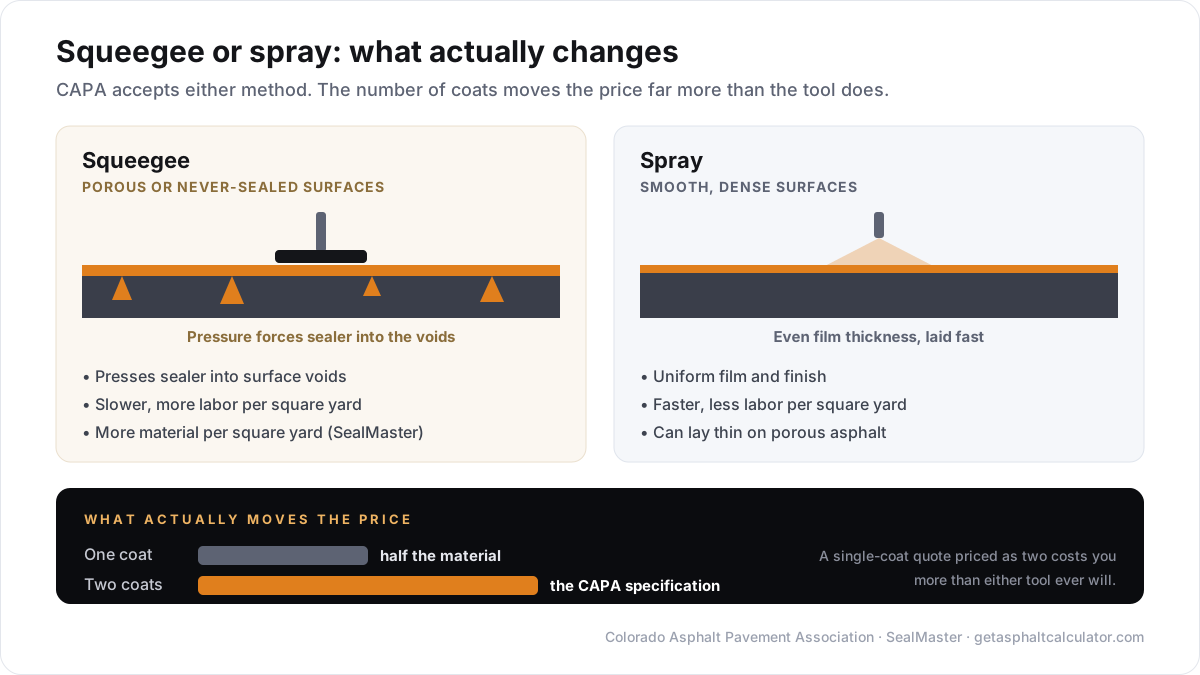
The practical difference is where each works. Squeegee pressure pushes sealer into surface voids, which matters on a porous or never-sealed driveway. Spray lays a more even film on smooth, dense asphalt. Plenty of contractors squeegee the first coat and spray the second for that reason. What should worry you is not the tool. It is a single-coat quote priced as though it were two, which costs you far more in service life.
Crack sealing and the other add-ons
Crack sealing is the add-on most likely to appear on your invoice, at $1 to $3 per linear foot. Sealer is a surface coating roughly the thickness of a business card. It closes hairline cracks and nothing else, so anything wider has to be dealt with first or the sealcoat is decoration over a hole.
| Add-on | Typical cost | When you need it |
|---|---|---|
| Crack sealing | $1 to $3 per linear foot | Any crack from 1/4 in to 1 1/2 in wide |
| Pothole patching | $50 to $200 each | Before sealing; the patch needs 30 to 90 days to cure first |
| Pressure washing | $0.27 to $0.39 per sq ft | Heavy dirt, moss or algae the blower will not lift |
| Oil spot primer | Usually bundled | Oil and grease stains, which sealer will not bond over |
| Third coat | $40 to $120 | High-traffic areas only, per the CAPA specification |
| Excess dirt surcharge | $100 to $200 | Long-neglected surfaces |
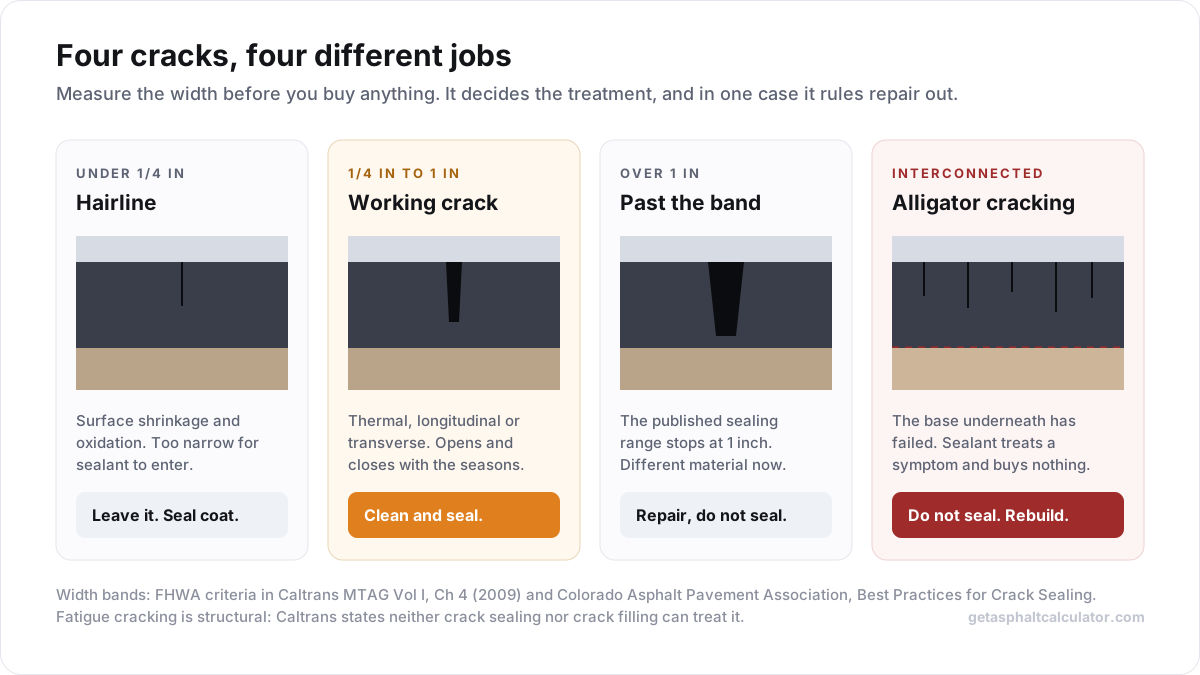
CAPA is specific about which cracks get filled. Clear vegetation and debris to at least half an inch deep. Fill the rest with hot rubberized crack sealant, but ignore hairline cracks under 1/4 inch — the seal coat closes those on its own. Cracks over 1 1/2 inches need a hot-applied mastic or full-depth replacement instead. Our step-by-step guide to fixing cracks in an asphalt driveway covers doing that part yourself before the crew arrives. It is the one add-on most homeowners can genuinely take off the bill.
Is it worth it to seal an asphalt driveway?
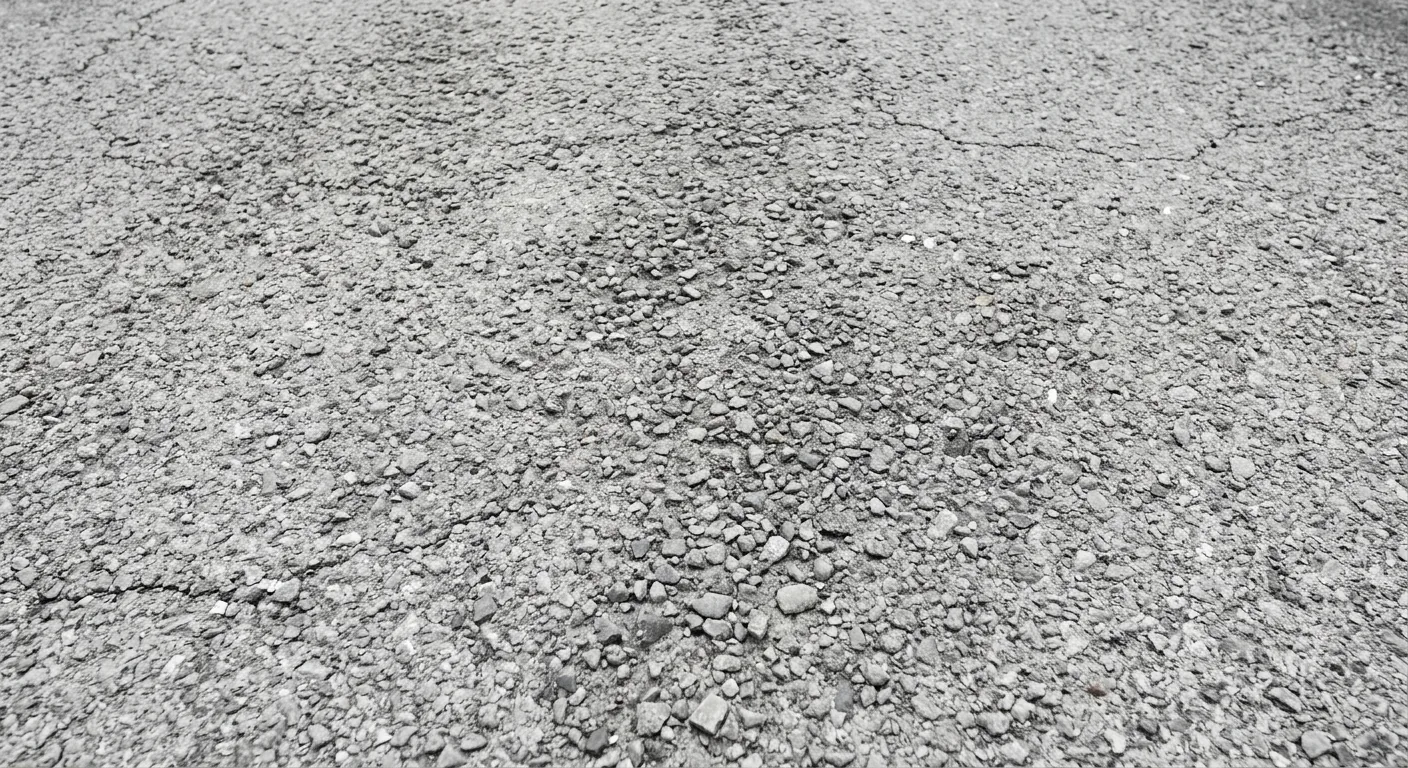
It is worth it when the surface shows the distresses sealing is designed to treat, and it is money for appearance when it does not. The Asphalt Institute is unusually direct about this. Sealing is effective "to renew old asphalt surfaces that have become dry and brittle with age, to seal small surface cracks and surface voids, and to inhibit raveling". It "should be done as soon as any of these distresses are noted". The Institute gives no interval at all. It notes that a well-built low-traffic pavement "should not require sealing for approximately 2 to 5 years".
Set against the alternative, the money looks reasonable. Twenty years of sealing an 800 sq ft driveway on a three-year cycle costs about what a single resurfacing costs.
| Over 20 years, 800 sq ft driveway | Cost |
|---|---|
| Sealcoating every 3 years, 6 applications | $1,200 to $2,700 |
| One resurfacing / overlay at $3 to $7 per sq ft | $2,400 to $5,600 |
| Full replacement at $7 to $15 per sq ft | $5,600 to $12,000 |
The honest caveat is that nobody, the Asphalt Institute included, promises that sealing defers a resurfacing. What sealing demonstrably does is slow surface oxidation and keep water out of the top of the pavement. It does nothing for a failing base, and no amount of it will fix alligator cracking or a driveway that has reached the end of its life. If you are not sure which situation you are in, our guide to resurfacing versus replacement is the decision to make before you spend anything on sealer.
The other half of the answer is frequency. Sealing a sound driveway every year is a real waste of money. CAPA warns against excess application: material that ends up picked up on shoes and tires. That is what over-sealing produces. Seal on condition, not on a calendar. Our asphalt driveway maintenance checklist sets out what to look for, and how long an asphalt driveway lasts shows how much maintenance actually moves the lifespan.
See how much of your quote is actually sealer. Enter your driveway dimensions and surface condition to get gallons, pails, water and sand under the published two-coat specification.
Open the sealcoat calculatorSources
- Colorado Asphalt Pavement Association — Best Practices for determining seal coat materials and for the proper placement of seal coat materials — co-asphalt.com
- Asphalt Institute — Asphalt maintenance and rehabilitation FAQs — asphaltinstitute.org
- U.S. Geological Survey — Coal-Tar-Based Pavement Sealcoat, PAHs, and Environmental Health — usgs.gov
- New York State Department of Environmental Conservation — Coal Tar-Based Pavement Sealers, ECL 37-0119(2) — dec.ny.gov
- PavemanPro — Sealcoating Cost — pavemanpro.com
- SealMaster — Spray or Squeegee: Choosing the Right Sealcoating Method — sealmaster.net
- Yelp — Cost of Sealcoating, from 286 real quotes provided to consumers — yelp.com
- TopSeal — How Much Does Driveway Sealcoating Cost in 2026?, March 2026 — topseal.com
- FixAsphalt — Parking Lot Seal Coating Costs for Asphalt, 2025 pricing — fixasphalt.com
- Inch Calculator — Cost to Seal an Asphalt Driveway, last updated July 2023 — inchcalculator.com
- Pavemade — Asphalt Emulsion Sealer pricing — pavemade.com
- The Home Depot — Latex-ite 4.75 Gal. Ultra Shield Driveway Filler Sealant, listing price August 2026 — homedepot.com
- V&F Paving — How Much Does Driveway Sealcoating Cost And What Affects The Price? — vfpaving.com
Frequently asked questions
Sealcoating an asphalt driveway costs $150 to $450 for most homes in 2026, covering two coats, cleaning the surface and filling ordinary cracks. A one-car driveway of about 200 square feet runs $150 to $250. A two-car driveway of 800 square feet runs $200 to $450. A 3,200 square foot driveway runs $650 to $1,500. Contractors publish a minimum job charge of $150 to $200, so on smaller driveways that minimum is usually the entire quote regardless of area.
About $0.20 to $0.30 per square foot on driveways over roughly 800 square feet. Below that size, per-square-foot pricing is misleading. A $200 minimum charge spread over a 200 square foot driveway works out to $1.00 per square foot. That is why published figures range from $0.08 to $1.50 for the same work. Never scale a small-driveway rate up to a large driveway — the fixed cost of the visit does not grow with the area.
$400 to $800 professionally in 2026, and about $350 to $450 in materials to do it yourself. At 2,000 square feet you are past the minimum charge, so the per-square-foot rate governs. The material works out to 222 square yards. At 0.125 gallons per square yard per coat over two coats, that is 55.6 gallons of mixed sealer, or 44.4 gallons of concentrate. Ten consumer pails, at roughly $35 each. Crack sealing is extra at $1 to $3 per linear foot.
$18 to $65 at retail in 2026, with mainstream consumer products clustered around $30 to $40. Latex-ite Ultra Shield sells at The Home Depot for $34.97 for a 4.75-gallon pail, or $29.72 each for three or more. Budget coal-tar emulsion runs $18 to $28. Commercial-grade concentrate is priced differently: about $9.69 per gallon by the 55-gallon drum and $8.76 by the 275-gallon tote, but $109 for a commercial 5-gallon pail.
Not relative to the alternatives, but the price you pay bears little relation to what goes on the driveway. On a typical 600 square foot driveway the sealer itself is worth $78 to $156 inside a $200 to $450 quote. The rest is the visit, the crew and the equipment. Across 20 years, sealing an 800 square foot driveway every three years costs $1,200 to $2,700. That is roughly what one resurfacing costs at $3 to $7 per square foot.
It is worth it when the surface shows the distresses sealing treats, and it buys appearance when it does not. The Asphalt Institute says sealing renews surfaces that have gone dry and brittle, seals small surface cracks and voids, and inhibits raveling. It should be done as soon as any of those appear. It gives no calendar interval and notes that a well-built low-traffic driveway should not need sealing for approximately 2 to 5 years. Sealing does nothing for a failing base or alligator cracking.
Get three local quotes and compare them on specification rather than headline price. Ask each contractor how many coats they are quoting, whether crack sealing is included or extra, what their minimum charge is, and which sealer they use. Regional variation is real, and coastal markets typically run high. But the bigger source of price difference between two quotes is usually one coat versus two.
It depends on the size of the driveway, and the answer surprises people. On a small driveway where a $200 minimum charge buys about $70 of sealer, doing it yourself saves most of the bill. On a 2,000 square foot driveway, DIY materials and tools come to $440 to $670. A contractor charges $400 to $800. The first job saves very little and takes two people a weekend. Tools are one-off, so a repeat sealing is cheaper.
Mostly coat count. The Colorado Asphalt Pavement Association specifies two coats over the whole surface. A one-coat job uses half the material and less labor. It can be quoted far lower without anyone being dishonest. Other causes are the minimum charge dominating small jobs, whether crack sealing and pressure washing are included, and the type of sealer in the tank. Ask for the specification, not just the total.
Roughly 190 to 280 square feet applied as the standard two coats, against label claims that typically quote 400 to 500 square feet. Label figures describe a single thin coat on smooth asphalt. The Colorado Asphalt Pavement Association rate is 0.10 to 0.15 gallons of mixed sealer per square yard per coat. At that rate one gallon of concentrate covers 37 to 56 square feet of finished two-coat driveway. Buying to the label number is the most common reason a DIY job runs out mid-coat.