Resurface when cracks are under a quarter inch wide and the base is solid. Replace when you see wide, deep cracking, standing water, or a driveway over 15 to 20 years old. Resurfacing adds 8 to 12 years of life for less money. Full replacement adds 20 to 30 years.
Resurface when cracks are under a quarter inch wide and the base underneath is solid. Replace when you see wide, deep cracking, standing water that will not drain, or a driveway that has passed the 15 to 20 year mark. Get this call right and you save real money either way. Get it wrong, and a cheap resurfacing job over a failed base just delays a replacement you were always going to need, while costing you the resurfacing money on top.
The real question isn't the surface, it's what's underneath
Every driveway question that actually matters here comes down to one thing: is the problem on top, or is it in the base? A worn, faded, lightly cracked surface sitting on a solid base is a resurfacing job. Deep structural failure, whatever the surface looks like, is a replacement job. Confusing the two is the single most common mistake homeowners make, and it is an easy mistake to make, since base failure is invisible until you know what to look for.
Signs you can resurface
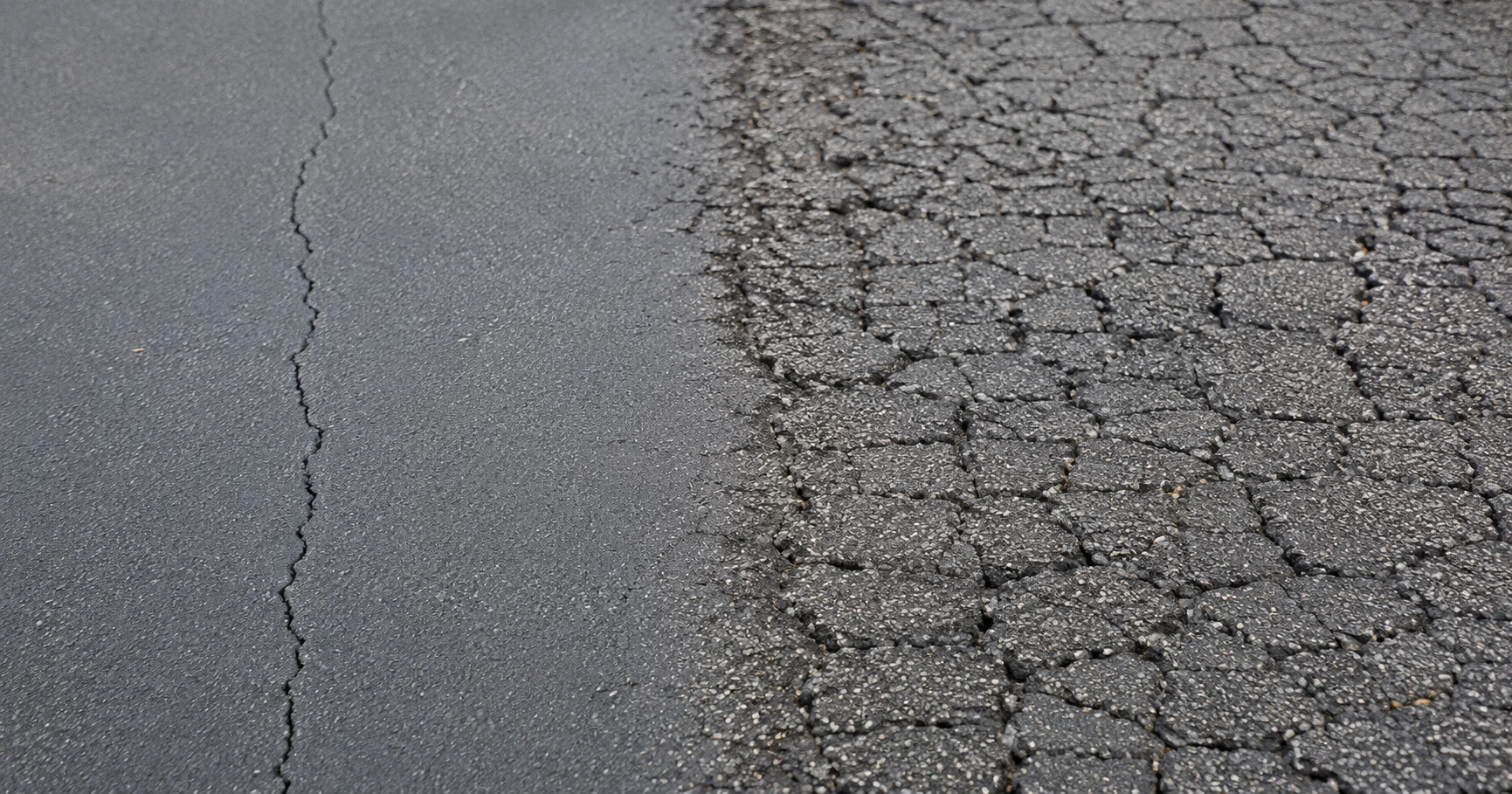
- Cracks under a quarter inch wide, not spreading or branching into a web pattern
- Fading, graying, or surface oxidation without structural cracking underneath it
- A driveway with a solid, stable base that has never shown signs of sinking or heaving
- You have kept up with sealcoating, which slows the surface aging that resurfacing addresses
Signs you need full replacement
- Alligator cracking, the interconnected web pattern that signals the base has already failed
- Standing water that pools and will not drain properly after rain
- Multiple potholes or soft, spongy spots underfoot, especially ones that keep coming back after patching
- A driveway over 15 to 20 years old showing widespread wear rather than isolated damage
- Visible sinking, heaving, or unevenness, which points to a base or drainage problem no surface layer can fix
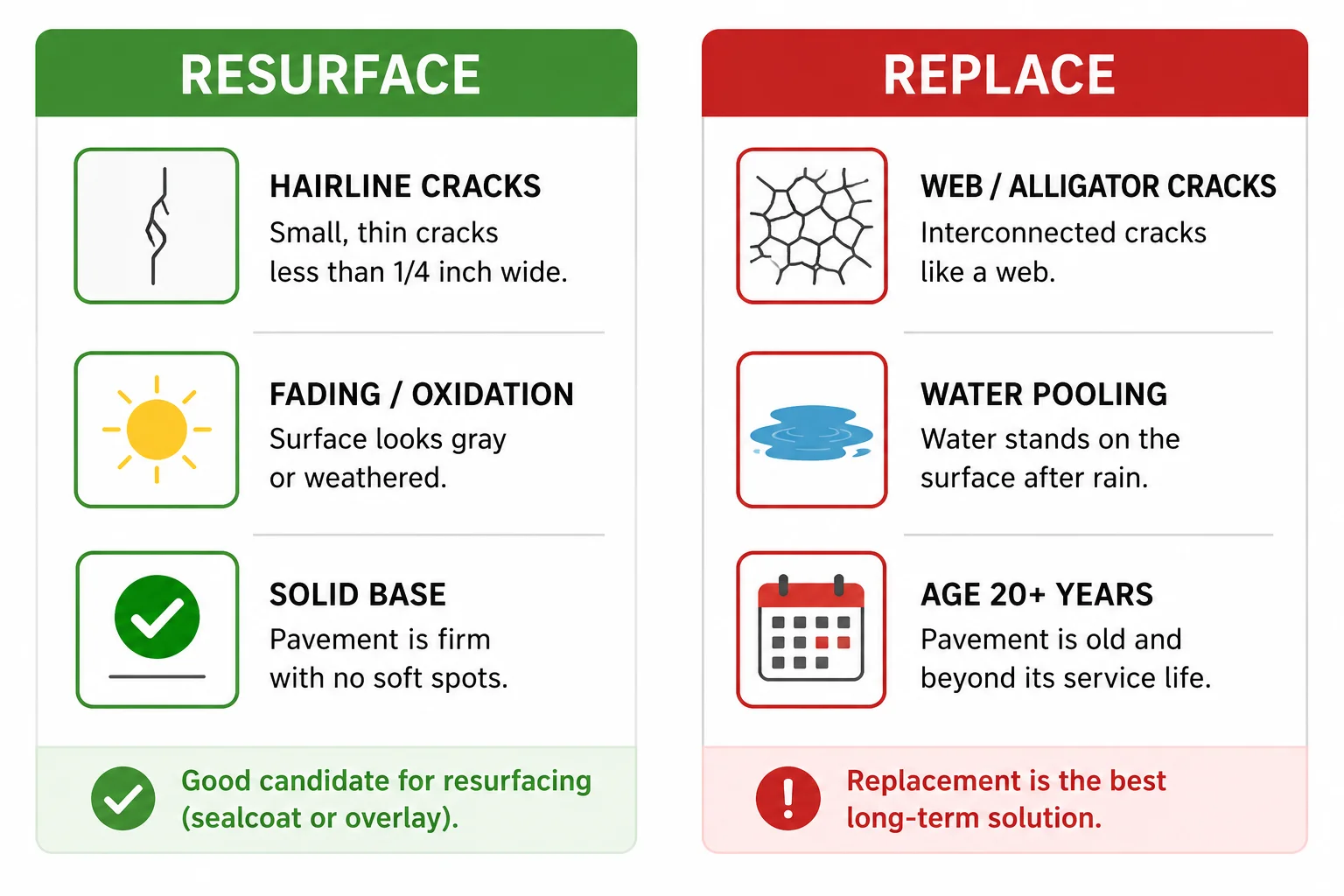
If you are seeing signs from both lists, lean toward replacement. A driveway with a mostly solid base but one bad corner might get a partial fix, but widespread mixed damage usually means the base is further gone than the surface alone suggests.
What resurfacing actually is
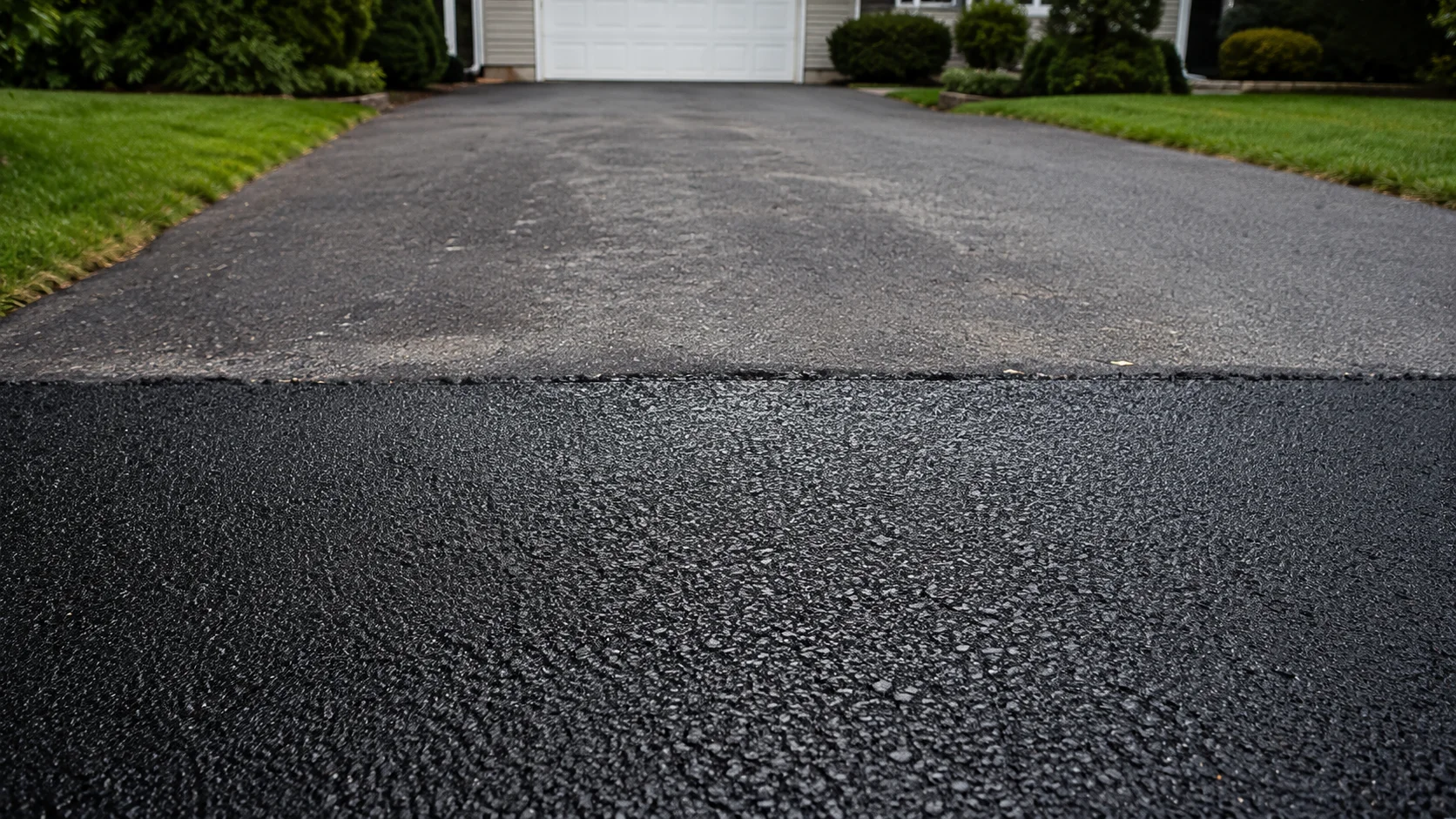
Resurfacing, also called an asphalt overlay, applies a new layer of hot asphalt, typically 1.5 to 2 inches, directly over the existing surface after cleaning, crack repair, and a tack coat to help the new layer bond to the old one. It does not touch the base. That is both the appeal and the limit of resurfacing: it is fast and comparatively cheap because it skips demolition and base work entirely, but it also means any problem living in the base stays exactly where it was.
If you are starting from scratch instead of fixing an existing driveway, see our asphalt vs concrete comparison to decide on a surface first.
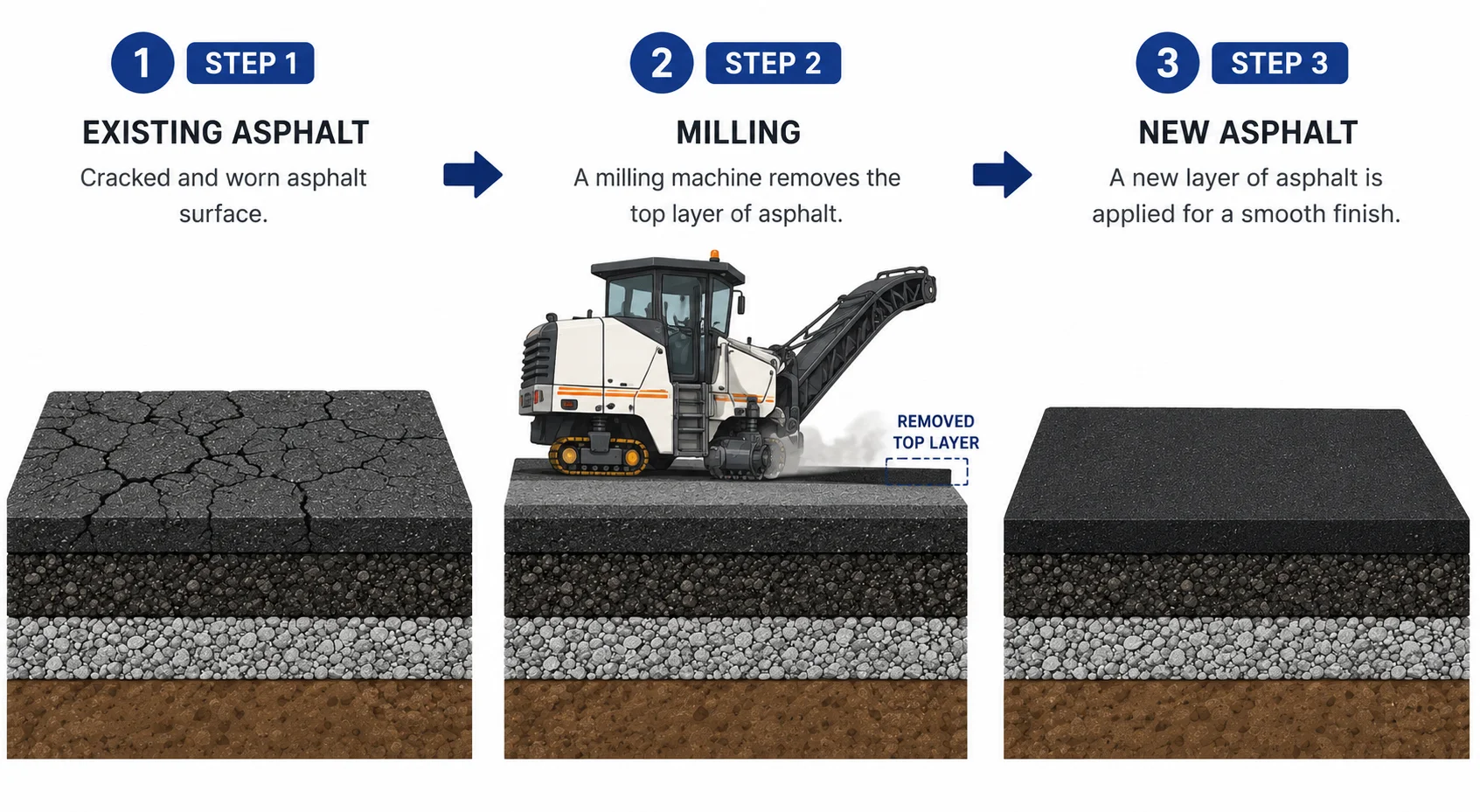
Mill and overlay is a specific variant worth knowing about. Instead of laying new asphalt directly on top of the old surface, a milling machine first grinds off the top inch or two of existing pavement before the new layer goes down. This keeps the driveway from gaining height with each resurfacing (which matters where the surface meets a garage door or a drainage grade) and gives the new layer a rougher, cleaner surface to bond to. It costs somewhat more than a straight overlay but is worth asking your contractor about if height or drainage at the edges is a concern.
What full replacement actually is
Replacement removes the existing asphalt down to the base, evaluates and repairs the subgrade underneath, installs a new compacted base layer, and lays new asphalt from the ground up. It is the only option that actually fixes a failed base, poor drainage, or a subgrade that was never properly compacted in the first place, because it is the only option that touches those layers at all.
The new base layer does not have to be virgin aggregate. Recycled asphalt millings are a legitimate, lower-cost option for the base under a full replacement, running a fraction of the price of new crushed stone while still providing a solid structural foundation for the new surface layer above it.
Replacement is also the point to reconsider asphalt thickness, not just the base. If the driveway has consistently struggled under heavier vehicles or a lot of traffic, our asphalt driveway thickness guide covers how to size the new surface layer for your actual use case instead of just rebuilding to the old spec.
Why does asphalt crack after resurfacing?
This is one of the most common complaints about resurfacing, and it has a specific name: reflective cracking. If the old asphalt underneath had cracks, those cracks tend to telegraph up through the new overlay within a season or two, following the exact same pattern as before. The new surface did not fail on its own. It inherited a crack pattern from the layer it was applied over.
This is not a reason to avoid resurfacing. It is a reason to be honest about what resurfacing can and cannot fix. A resurfaced driveway with a genuinely solid base will hold up well. One applied over a surface with deep, active cracking will likely show some of that cracking again, just later and less severely than if nothing had been done at all.
Can asphalt be resurfaced multiple times?
Yes, but there is a practical limit. Each resurfacing adds height to the driveway, and each one only works if the base underneath is still sound. Two resurfacings over a genuinely stable base is common and reasonable. By the time a driveway needs a third resurfacing in its lifetime, it is worth a harder look at whether the base is actually still holding up, or whether you are just delaying a replacement that is coming regardless.
Resurfacing vs sealcoating: not the same thing
These two get confused constantly, and they are not interchangeable. Sealcoating is a thin protective coating applied every 2 to 3 years to slow UV damage, oxidation, and minor surface wear. It does not add structural material and cannot fix cracks, potholes, or any real damage. Resurfacing adds an entirely new structural layer of asphalt and can address real surface deterioration, not just protect against future wear. To size the sealer for the protective job, use the sealcoat calculator and see what what a sealcoat actually costs runs; for the cracks it cannot fix, see how to fix cracks in an asphalt driveway.
If your driveway just looks a little faded and gray, sealcoating is likely enough. If it has real cracking or surface damage, sealcoating will not fix it, and resurfacing or replacement is the actual conversation to have.
Cost and lifespan at a glance
| Resurfacing | Full replacement | |
|---|---|---|
| Touches the base | No | Yes |
| Typical added lifespan | 8 to 12 years | 20 to 30 years |
| Project time | 1 to 2 days | 3 to 5 days |
| Cure time before driving | 24 to 48 hours | 3 to 7 days |
| Fixes drainage/base issues | No | Yes |
For exact dollar figures on your specific driveway size, use the asphalt driveway cost calculator, which breaks out new installation, replacement, and resurfacing costs side by side.
Why some contractors recommend replacement over resurfacing
Not always because they want the bigger job, though it is fair to ask the question. A contractor who actually inspects the base before quoting has a real reason to recommend replacement if they see standing water, soft spots, or a subgrade that was never compacted properly. Resurfacing over a base like that would be a short-term fix at best, and a contractor who knows this and quotes resurfacing anyway is not doing you any favors.
The honest version of this conversation involves the contractor explaining specifically what they found in the base, not just stating a recommendation. If a quote for replacement does not include some explanation of what is actually wrong underneath the surface, ask for one before you agree to the bigger, more expensive job.
At a glance: resurfacing vs replacement in seven numbers
- 1Quarter inch — the crack width threshold. Under it, resurfacing is usually viable. Over it and branching, lean replacement.
- 215 to 20 years — the age threshold where widespread wear starts to signal the base itself is aging out, not just the surface.
- 38 to 12 years — added lifespan from resurfacing.
- 420 to 30 years — added lifespan from full replacement, since it is the only option that touches the base.
- 51.5 to 2 inches — the typical thickness of a new resurfacing overlay.
- 624 to 48 hours vs 3 to 7 days — cure time before driving, resurfacing versus full replacement.
- 7Two — the practical limit of resurfacings over a genuinely stable base before it is worth reassessing whether the base itself still holds up.
Sources and citations
- National Asphalt Pavement Association — asphaltpavement.org
- Asphalt Institute — asphaltinstitute.org
- Asphalt Driveway Cost Calculator (internal tool)
- Asphalt Parking Lot Calculator (internal tool)
- Asphalt Driveway Thickness Guide (internal)
- Asphalt Parking Lot Cost Guide (internal)
- Asphalt Millings Cost (internal guide)
Frequently asked questions
It depends entirely on the base, not the surface appearance. Resurface if cracks are under a quarter inch wide and the base is solid. Replace if you see alligator cracking, standing water, recurring potholes, or the driveway is over 15 to 20 years old. A driveway with a failed base will not hold up under resurfacing regardless of how the surface looks.
Yes, this is exactly what resurfacing is, and it is a standard, well-established practice. It only works well when the existing base is stable and the old surface is not showing deep structural cracking. Applying new asphalt over a failed base is a short-term cosmetic fix at best, since the base problem remains untouched underneath.
This is called reflective cracking. Cracks in the old asphalt underneath a new overlay tend to telegraph up through the new surface within a season or two, following the same pattern as before, because the underlying layer was not actually repaired, just covered. It is a known limitation of resurfacing, not a sign the new work failed.
Yes, typically twice over a genuinely stable base is common and reasonable. Each resurfacing adds height and only works if the base underneath is still sound. If a driveway is heading toward a third resurfacing, it is worth evaluating whether the base itself is still holding up rather than continuing to add layers.
A standard overlay applies new asphalt directly on top of the existing surface. Mill and overlay first grinds off the top 1 to 2 inches of old pavement with a milling machine before applying the new layer. This avoids the driveway gaining height with each resurfacing and gives the new asphalt a cleaner, rougher surface to bond to. It costs somewhat more than a straight overlay.
Sealcoating is a thin protective coating applied every 2 to 3 years that slows UV damage and surface oxidation. It adds no structural material and cannot fix cracks or real damage. Resurfacing adds a genuine new layer of asphalt, typically 1.5 to 2 inches, and can address real surface deterioration. If your driveway just looks faded, sealcoating is likely enough. If it has actual cracking, sealcoating will not fix it.
Resurfacing can address surface-level damage and minor cracking, but a driveway with active potholes usually has some degree of base weakness at those specific spots, which needs to be repaired before the new layer goes down, not just paved over. Widespread or recurring potholes across the driveway are a stronger signal that replacement, not resurfacing, is the right call.
A resurfaced driveway typically needs 24 to 48 hours before it can handle regular traffic. A full replacement needs 3 to 7 days, since the deeper, thicker new asphalt and rebuilt base need more time to cure and stabilize before they can support regular vehicle weight.
Usually because they found a real problem in the base during inspection, such as standing water, soft spots, or improperly compacted subgrade. Resurfacing over a failed base only delays the inevitable and costs money on top of the eventual replacement. A contractor recommending replacement should be able to explain specifically what they found wrong underneath the surface, not just state the recommendation.