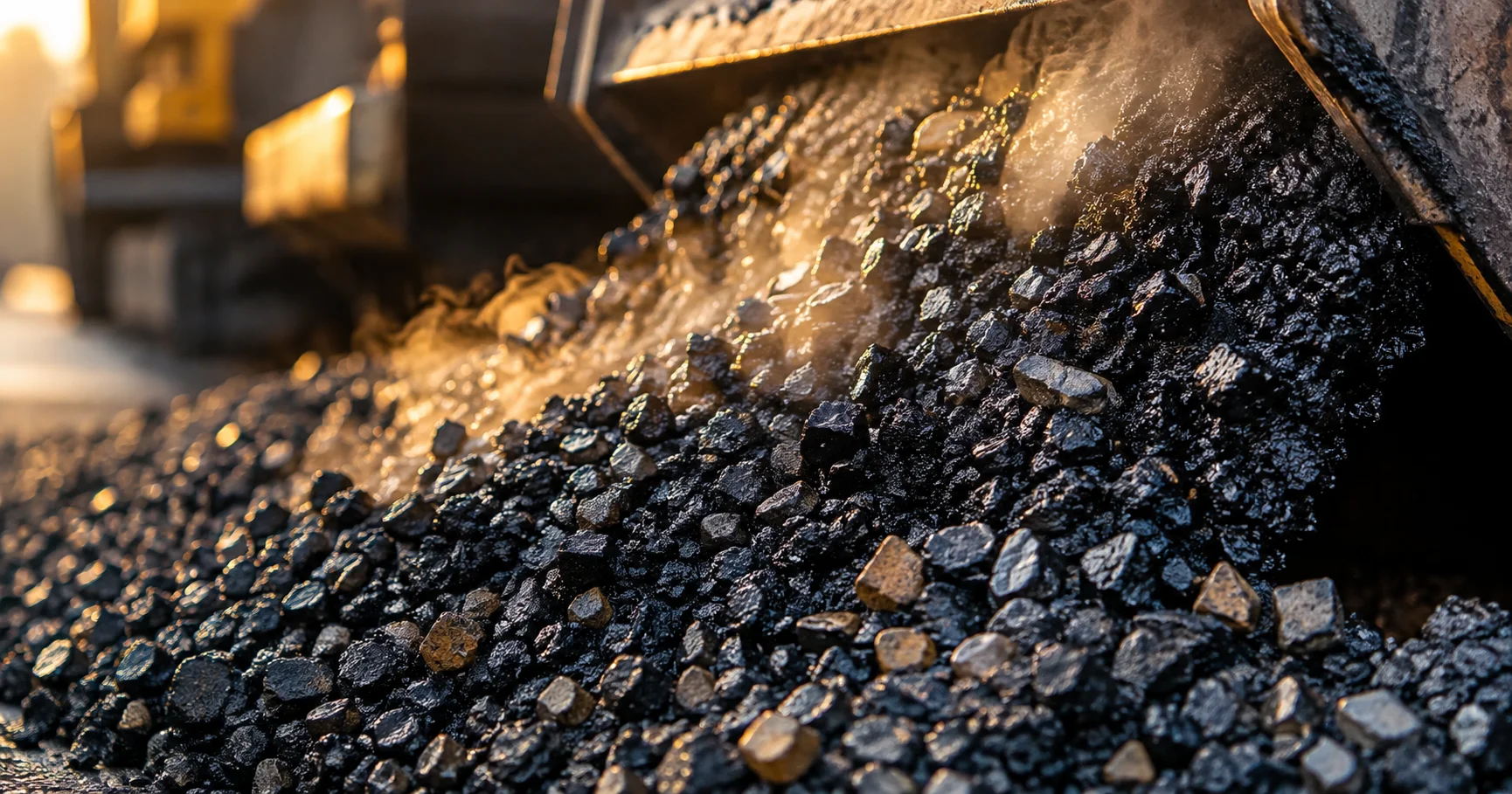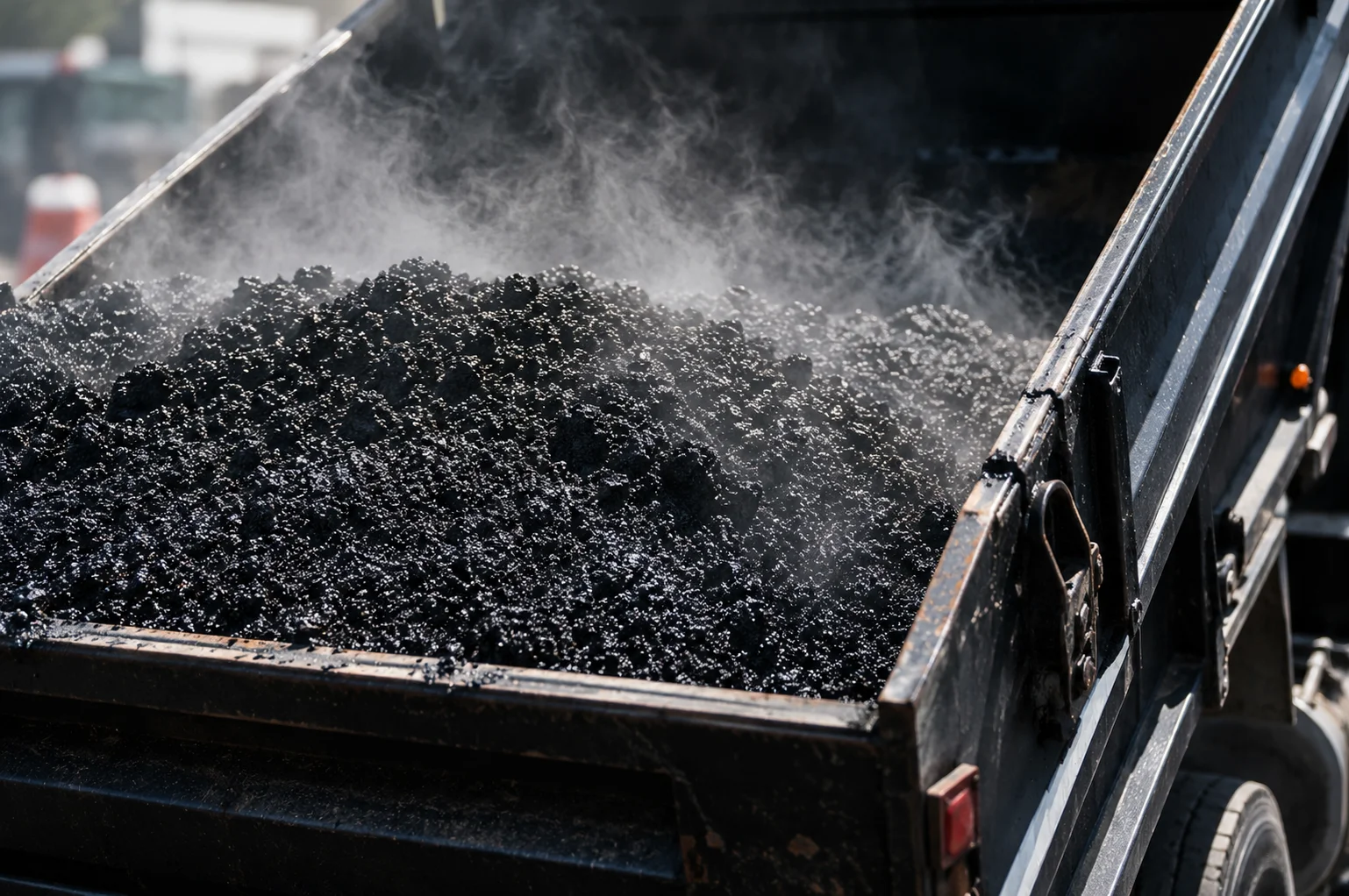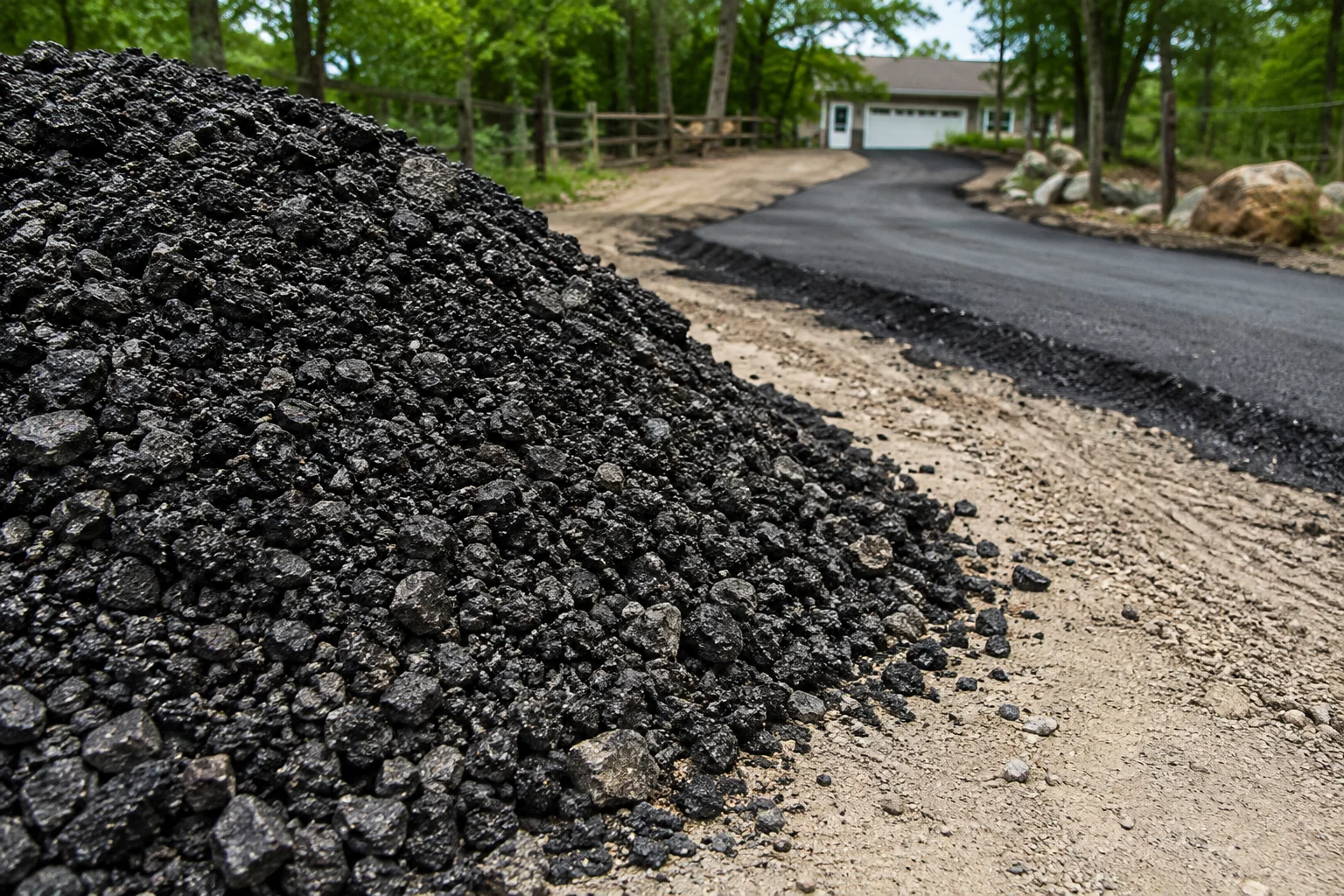
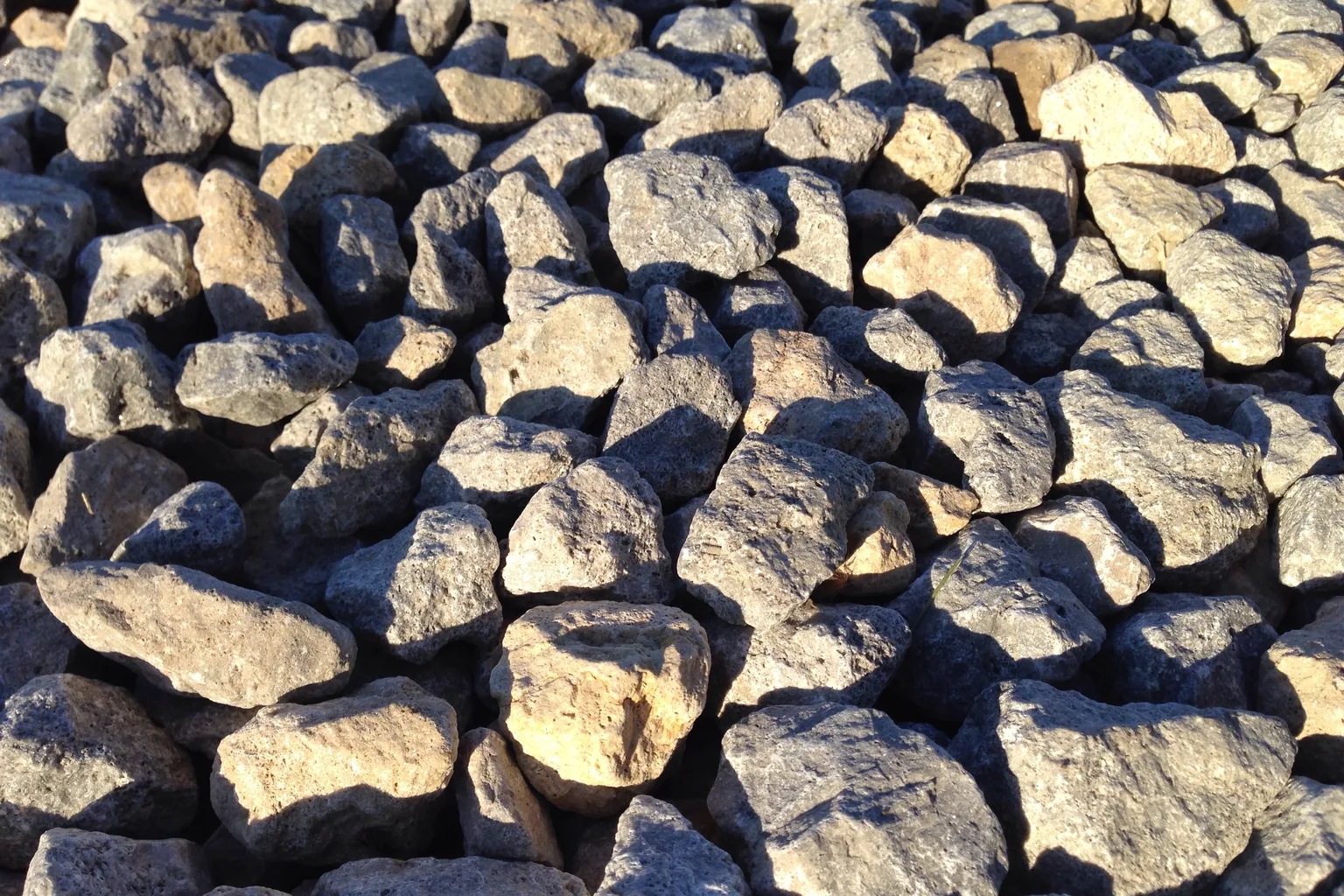
A gravel driveway costs $2 to $6 per square foot installed in 2026, versus $7 to $15 for asphalt, roughly 60% to 70% less upfront. Asphalt wins on a smooth, hard, low-maintenance surface. Gravel wins on price, drainage, and long rural driveways where a hard surface is not really needed. Choose gravel if budget and drainage matter more than surface feel. Choose asphalt if you want a paved surface you do not have to regrade every couple of years.
A gravel driveway costs $2 to $6 per square foot installed in 2026, while asphalt runs $7 to $15 per square foot. For a typical 800 sq ft driveway, that is roughly $1,600 to $4,800 in gravel against $5,600 to $12,000 in asphalt, a gap of $4,000 or more before either surface has aged a single winter.
This site runs a free driveway cost calculator, not a gravel yard or a paving crew, so there is no surface here that benefits from you choosing it. What follows is a straight cost, lifespan, and maintenance comparison, plus the number most gravel-vs-asphalt articles skip: what each surface actually costs to own over 20 years, not just to install.
National cost-guide aggregators price gravel driveways at roughly $1 to $10 per square foot depending on stone type, depth, and region (Angi, 2026), a wide range that brackets the $2 to $6 figure this site's own driveway cost calculator uses for a standard crushed-stone install with basic site prep.
Asphalt vs gravel driveway at a glance
| Factor | Asphalt | Gravel |
|---|---|---|
| Installed cost per sq ft | $7 to $15 | $2 to $6 |
| 800 sq ft driveway (installed) | $5,600 to $12,000 | $1,600 to $4,800 |
| Lifespan | 15 to 20 years before resurfacing | Indefinite, with regular top-ups |
| Maintenance | Sealcoat every 3 to 5 years | Regrade every 2 to 3 years, restock every 2 to 5 years |
| Cold climate | Excellent, flexes with freeze-thaw | Drains well but ruts under snowplows |
| Hot climate | Can soften above 100°F | Excellent, unaffected by heat |
| Drainage | Impervious, needs runoff planning | Permeable when loose, but compaction from traffic often negates this |
| Best for | Smooth, low-maintenance daily-use driveways | Rural, long, or budget-constrained driveways |
Cost by driveway size
Here is the same $2 to $6 versus $7 to $15 per square foot math applied to five common driveway sizes, so you are not doing it yourself.
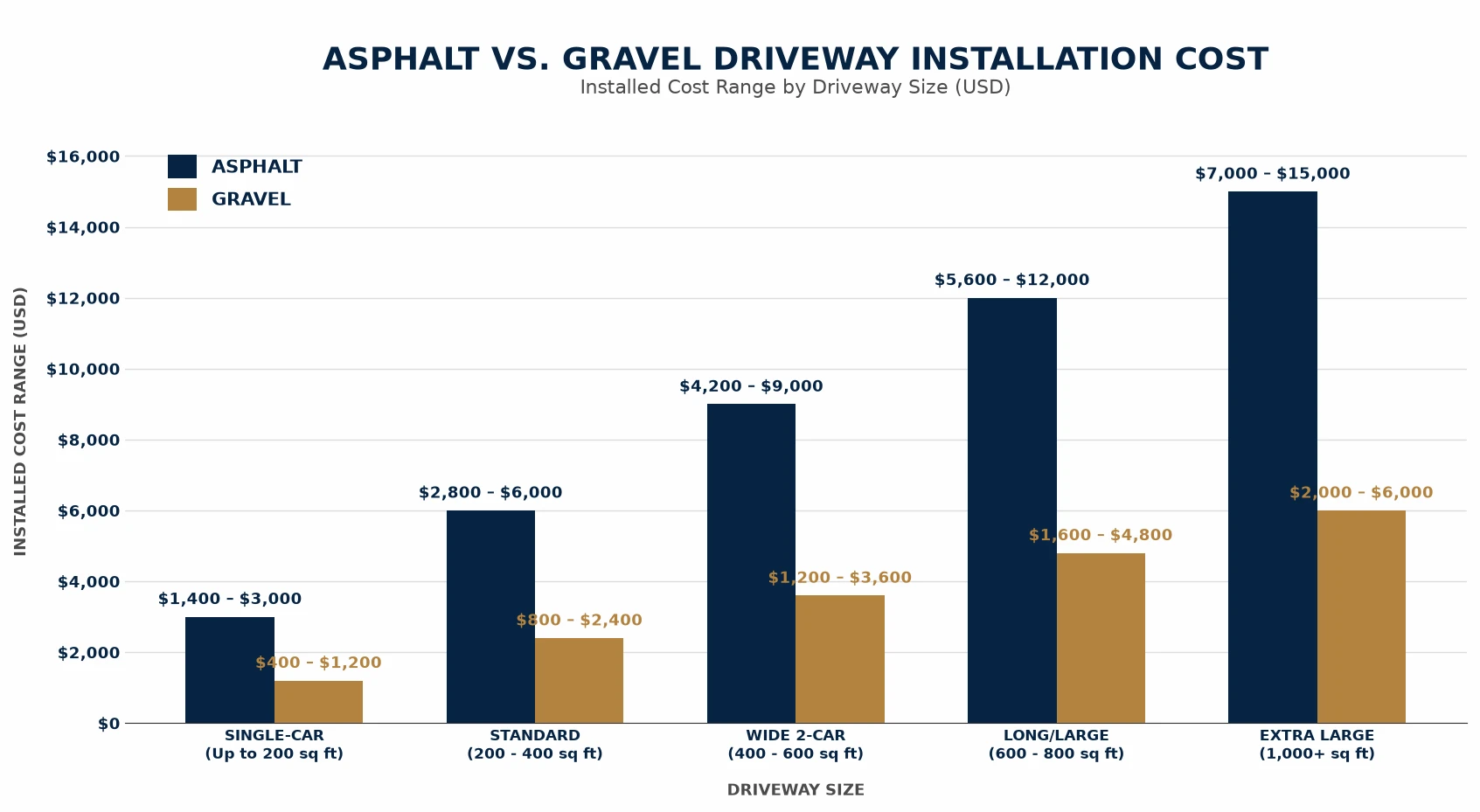
The dollar gap widens as the driveway gets bigger, not smaller. A single-car pad has roughly a $1,800 spread between the two surfaces; an extra-large 1,000+ sq ft driveway has an $8,000 to $9,000 spread. If you have a long rural driveway, that math is usually what settles the decision before anything else does.
Which lasts longer: asphalt or gravel?
Neither surface really "wins" on lifespan, because they fail differently. A properly installed asphalt driveway lasts 15 to 20 years before it needs resurfacing, then it is done: no more small fixes, just a new surface. Gravel does not have a hard failure point. It slowly scatters, ruts, and grows weeds, and it can be maintained indefinitely as long as you keep adding stone and regrading it every 2 to 3 years.
If you are weighing all three common driveway materials, concrete is the actual long-lifespan winner at 30 to 40+ years with minimal upkeep, covered in asphalt vs concrete driveway. Between just asphalt and gravel, asphalt gives you a defined lifespan and a hard surface the whole time. Gravel gives you an open-ended surface that needs small, recurring work instead of one large bill every 15 to 20 years.
Maintenance: sealcoating vs. regrading
Asphalt maintenance costs less per year but comes in small, predictable doses. Gravel maintenance is cheaper per event but more frequent. Asphalt needs sealcoating every 3 to 5 years at $0.15 to $0.25 per square foot, plus occasional crack filling at $1 to $3 per linear foot. Gravel needs regrading every 2 to 3 years and fresh stone every 2 to 5 years, both usually handled in the same visit, running roughly $400 to $800 for an 800 sq ft driveway.
Skip gravel maintenance for a few years and the driveway develops ruts, low spots that pool water, and bare patches where the base shows through. Skip asphalt sealcoating and the surface still works, it just ages faster and cracks sooner than its full 15 to 20 year lifespan.
Appearance, drainage, and everyday drivability
Asphalt gives you a smooth, uniform black surface that plows clear easily, does not migrate, and is comfortable to walk, bike, or push a stroller across. Gravel is loose by design: it scatters into the yard, tracks into the garage, and is genuinely difficult to plow, since the blade can scoop stone along with the snow.
Gravel is permeable in theory, since water can pass between loose stones. A driveway is not loose gravel, though: vehicle traffic compacts the stone and the soil beneath it, and many municipal stormwater codes classify a compacted, driven gravel surface as impervious for exactly that reason (Lycoming County Water and Sewer Authority). Do not assume a gravel driveway keeps a property under an impervious-coverage limit without checking the local ordinance first. Several jurisdictions treat it the same as asphalt or concrete.
20-year cost of ownership: asphalt vs. gravel
The install price is not the full picture. Here is what the same 800 sq ft driveway costs across 20 years in each surface, combining installation with the maintenance schedule above.
| Year | What happens | Asphalt | Gravel |
|---|---|---|---|
| 0 | Install | $5,600 to $12,000 | $1,600 to $4,800 |
| 1 | First sealcoat (asphalt) | $120 to $200 | $0 |
| 3 to 4 | Sealcoat / regrade | $120 to $200 | $400 to $800 |
| 6 to 8 | Sealcoat / regrade | $120 to $200 | $400 to $800 |
| 10 to 12 | Sealcoat / joint seal / regrade | $120 to $200 | $400 to $800 |
| 15 | Resurface (asphalt) / regrade (gravel) | $2,400 to $5,600 | $400 to $800 |
| 16 to 18 | Sealcoat / regrade | $120 to $200 | $400 to $800 |
| 20-year total | $8,720 to $18,600 | $4,000 to $12,600 |
Gravel starts far cheaper and stays cheaper. Over 20 years, the low-end totals differ by roughly $4,700 and the high-end totals differ by nearly $6,000, even after accounting for every regrade and sealcoat. The gap that matters most, though, is when you pay it: asphalt's biggest cost after installation lands in one lump sum at year 15 (resurfacing), while gravel spreads its costs out in smaller, more frequent amounts the whole time.
When gravel is the right choice
- You have a long rural driveway. The per-foot savings multiply quickly over distance, and a hard surface matters less when neighbors and traffic are miles away.
- Budget is the deciding factor. A 600 sq ft driveway costs roughly $2,400 to $3,600 less installed in gravel than asphalt.
- You want cheaper utility access later. Gravel can be pulled back and replaced for far less than cutting and patching a paved surface when a buried line needs digging up.
- The property is temporary, seasonal, or an investment. A hard surface that outlives your ownership of it is not worth paying for.
- You do not mind doing, or paying for, upkeep every couple of years instead of one larger job every 15 to 20 years.
When asphalt is the right choice
- You want a smooth surface for daily use. Bikes, strollers, high heels, and wheelchairs all move across asphalt far more easily than loose stone.
- You need to plow or shovel regularly. A hard, bound surface will not scatter or lose material to the plow blade the way gravel does.
- You would rather pay once every 15 to 20 years than manage recurring regrading and restocking.
- An HOA or local code requires a paved surface, which rules gravel out regardless of cost.
- Once you have decided on asphalt, how thick your new driveway should be depends on how it will be used.
Is it cheaper to pave or gravel a driveway?
Gravel is cheaper to install, by a wide margin: $2 to $6 per square foot against $7 to $15 for asphalt paving, or roughly 60% to 70% less upfront for the same driveway. That gap narrows, but never closes, once you factor in 20 years of gravel regrading against a single asphalt resurfacing. Gravel still ends up thousands of dollars cheaper over two decades in most cases, which is why it remains the default choice for long or rural driveways where the extra maintenance is a fair trade for the lower price.
At a glance: asphalt vs gravel in six numbers
- 1$2 to $6 vs $7 to $15 per sq ft — installed cost in 2026, gravel versus asphalt.
- 260% to 70% less — roughly how much less gravel costs upfront than asphalt for the same driveway.
- 3Every 2 to 3 years — how often a gravel driveway needs regrading to stay smooth and well-drained.
- 415 to 20 years — how long an asphalt driveway lasts before it needs resurfacing.
- 5$4,000 to $12,600 vs $8,720 to $18,600 — 20-year cost of ownership for an 800 sq ft driveway, gravel versus asphalt.
- 66 to 8 inches — the compacted gravel base depth beneath every asphalt driveway, regardless of which surface ends up on top.
Sources and citations
- National Asphalt Pavement Association — asphaltpavement.org
- Angi, "How Much Does a Gravel Driveway Cost?" (2026) — angi.com
- Lycoming County Water and Sewer Authority, "Why Are Gravel/Stone Driveways and Parking Areas Considered Impervious Surface?" — lcwsa.net
- Asphalt Driveway Cost Calculator (internal tool)
- Asphalt Calculator (internal tool)
- Asphalt vs Concrete Driveway (internal guide)
- Asphalt Millings Cost (internal guide)
- Asphalt Driveway Thickness Guide (internal)
Frequently asked questions
Concrete lasts longest among the three common driveway materials, typically 30 to 40+ years with minimal upkeep. Between asphalt and gravel specifically, asphalt gives you a defined 15 to 20 year lifespan before it needs resurfacing, while gravel has no hard failure point and can be maintained indefinitely with regular regrading and fresh stone.
Gravel costs $2 to $6 per square foot installed against $7 to $15 for asphalt, making it roughly 60% to 70% cheaper upfront for the same driveway. For an 800 sq ft driveway, that is a difference of about $4,000 to $7,200 at installation.
Gravel is the cheapest true driveway surface, at $2 to $6 per square foot installed. Recycled asphalt millings come in a step above at $10 to $55 per ton, and new asphalt is the cheapest hard-paved option at $7 to $15 per square foot. Bare dirt or a mowed grass strip is technically cheaper than all of these, but neither holds up to regular vehicle traffic.
Gravel, by a wide margin. At $2 to $6 per square foot installed versus $7 to $15 for asphalt paving, gravel runs roughly 60% to 70% less upfront. The gap narrows over 20 years of gravel regrading versus one asphalt resurfacing, but gravel still typically ends up thousands of dollars cheaper over that span.
Yes, but the gravel needs to be compacted, graded, and topped with a proper base course first. Asphalt cannot be laid directly over loose, unconsolidated stone. Most contractors treat an existing gravel driveway as a head start on the base layer rather than a surface they can pave over as-is, which can lower cost compared with starting from bare dirt.
Asphalt typically reads as more move-in-ready to buyers and appraisers, since it needs no immediate work. Gravel is common and accepted in rural markets but can register as a deferred-maintenance item in suburban markets where paved driveways are the norm. Condition matters more than material for either surface: a well-maintained gravel driveway beats a cracked, weedy asphalt one.
Plan on topping up gravel every 2 to 5 years for routine wear, and regrading every 2 to 3 years to restore the crown and fill ruts. High-traffic driveways, steep grades, or areas with heavy rain need both more often, sometimes annually.
Asphalt is better for steep grades. Gravel migrates downhill under gravity and tire spin, requiring far more frequent regrading and replenishment on a slope than on flat ground. Asphalt's bound surface stays in place regardless of grade, which is why most steep or long uphill driveways use asphalt, millings, or concrete rather than loose gravel.
If this means an asphalt driveway built over a compacted gravel base, yes, that is the standard construction method. Every asphalt driveway sits on 6 to 8 inches of compacted gravel base beneath 2 to 3 inches of hot mix asphalt on top. The gravel is not visible once the project is finished, but it is doing structural work under the surface.