To convert square yards to tons of asphalt, multiply the area in square yards by the depth in inches, then multiply by 0.054. A 500 square yard lot at 2 inches deep needs about 54 tons of compacted hot mix asphalt.
Square yards, not square feet, is the unit most paving specs, state DOT contracts, and commercial parking lot jobs actually use, which is why this shortcut exists alongside the square-foot tonnage formula. The math underneath is identical, the same 145 lb/ft³ compacted density this site uses everywhere, just pre-baked into one constant so you skip the depth-to-feet conversion entirely.
The square yards to tons formula
Tons = Square yards × Depth in inches × 0.054
That 0.054 constant comes from the same math as the square-foot formula. One square yard is 9 square feet, so at 1 inch of depth (1/12 of a foot) and 145 lb/ft³ compacted density, 9 × (1/12) × 145 works out to 108.75 lbs, or about 0.054 tons, per square yard per inch of depth. The Asphalt Institute publishes this exact rule of thumb as 110 lbs per square yard per inch, its own rounding of the same relationship, in Five handy rules of thumb for successful asphalt pavement construction.
Worked example: 500 square yard parking lot patch at 2 inches
- Square yards: 500 SY (given)
- Depth: 2 inches (no conversion needed, the constant already accounts for inches)
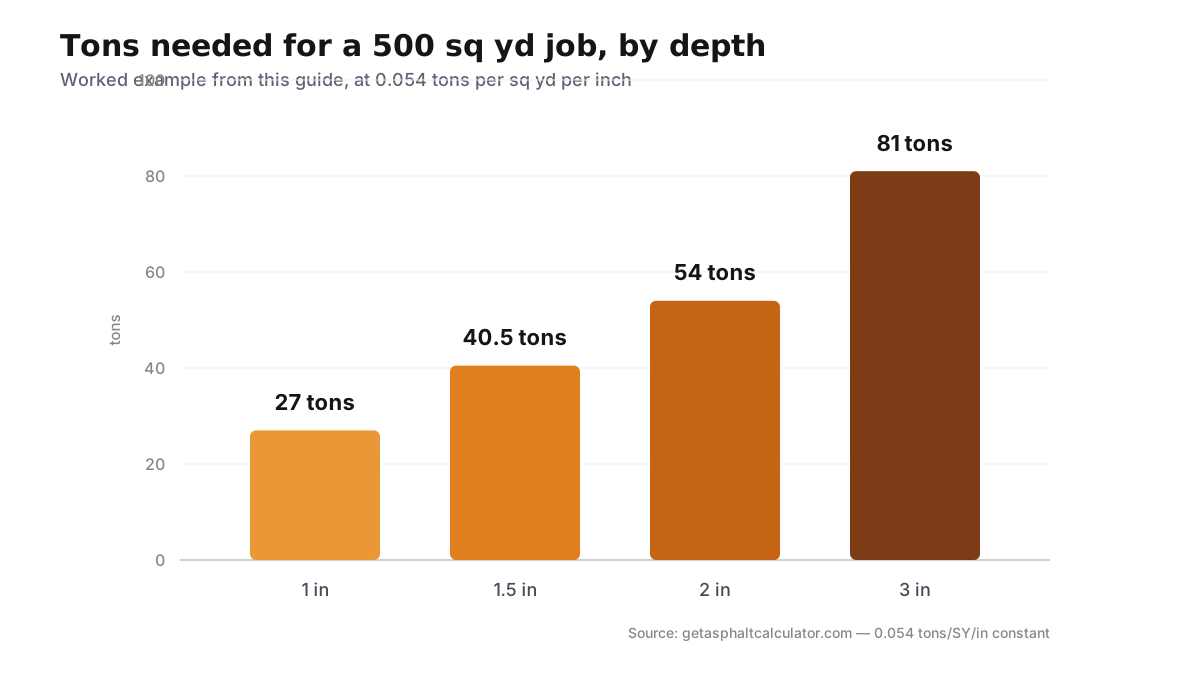
- Tonnage: 500 × 2 × 0.054 = 54 tons
Order 5% to 10% extra for compaction and waste, the same buffer the square-foot tonnage formula recommends. For this patch, that means ordering 56.5 to 59.5 tons rather than the bare 54 the formula returns.
Square yards to tons conversion chart
| Square yards | 1 in deep | 1.5 in deep | 2 in deep | 3 in deep | 4 in deep |
|---|---|---|---|---|---|
| 100 SY | 5.4 tons | 8.1 tons | 10.8 tons | 16.2 tons | 21.6 tons |
| 500 SY | 27 tons | 40.5 tons | 54 tons | 81 tons | 108 tons |
| 1,000 SY | 54 tons | 81 tons | 108 tons | 162 tons | 216 tons |
| 5,000 SY | 270 tons | 405 tons | 540 tons | 810 tons | 1,080 tons |
Working from an area in square feet instead? Divide by 9 to get square yards, or use the square-foot tonnage formula directly.
Square yards vs. square feet: converting between the two
One square yard equals 9 square feet, a 3 by 3 foot square. Most paving specs, state DOT contracts, and commercial parking lot bids are written in square yards, while residential driveway quotes and this site's square-yardage calculator typically work in square feet. To convert an area from square feet to square yards, divide by 9: the 500 square yard lot in the worked example above is the same 4,500 square feet you would measure with a tape.
Going the other direction works the same way: multiply square yards by 9 to get square feet. If a contractor's bid calls for 1,200 square yards of overlay, that is 1,200 × 9 = 10,800 square feet, a useful cross-check when a bid is written in square yards but you measured the lot yourself in feet.
Common mistakes converting square yards to tons
- Confusing square yards with cubic yards. Square yards measure area, cubic yards measure volume. Asphalt sold by the cubic yard uses a completely different constant, about 1.96 tons per cubic yard at standard compacted density (see our tonnage guide for that figure), not 0.054.
- Using depth in feet instead of inches. This shortcut's 0.054 constant is calibrated for inches. Plug in feet by mistake and the result comes out 12 times too high.
- Applying 110 lb/SY/in to loose, uncompacted mix. That figure describes compacted hot mix. Loose mix straight off the truck weighs 10% to 20% less per unit volume until it is rolled, the same distinction the tonnage formula guide makes for the 145 lb/ft³ figure.
- Forgetting the waste buffer. Order 5% to 10% extra to cover compaction, waste, and an uneven base, same as any tonnage calculation.
At a glance: the square yard conversion in four numbers
- 10.054 tons — the square-yard-and-inch constant every calculation in this guide runs on.
- 29 sq ft — one square yard, the conversion figure between the two most common paving units.
- 3110 lbs — the Asphalt Institute's own rounded rule of thumb per square yard per inch of depth.
- 454 tons — the worked example result for a 500 square yard lot at 2 inches deep.
Sources and citations
- Asphalt Institute — Five handy rules of thumb for successful asphalt pavement construction
- Asphalt Institute — Asphalt pavement thickness and mix design FAQ
- Asphalt Square Yardage Calculator (internal tool)
- Asphalt Parking Lot Calculator (internal tool)
- How to Calculate Asphalt Tonnage (internal guide)
- How Much Does Asphalt Weigh (internal guide)
Frequently asked questions
It depends on depth, since the relationship is Square yards = Tons ÷ (Depth in inches × 0.054). At 2 inches deep, one ton covers about 9.3 square yards. At 1 inch deep, about 18.5 square yards, since a thinner layer stretches the same weight of material over more area.
Square yards measure area, the flat footprint of a job. Cubic yards measure volume, area times depth. Asphalt tonnage calculations use square yards (or square feet) plus a separate depth figure, not cubic yards, though cubic yards do appear on some specs: one cubic yard of compacted hot mix asphalt weighs about 1.96 tons.
State DOT specifications and most commercial paving contracts are written in square yards by convention, a holdover from how road and parking lot bids have traditionally been measured and priced. Residential driveway quotes more often use square feet, which is why this site publishes both versions of the tonnage formula.
It is a rule of thumb, not a guaranteed figure. It assumes standard compacted hot mix density in the 142 to 148 lb/ft³ range, per the Asphalt Institute's own published figures. If your supplier gives you a mix-specific density from the job ticket, use that instead of the rule of thumb for a precise number.