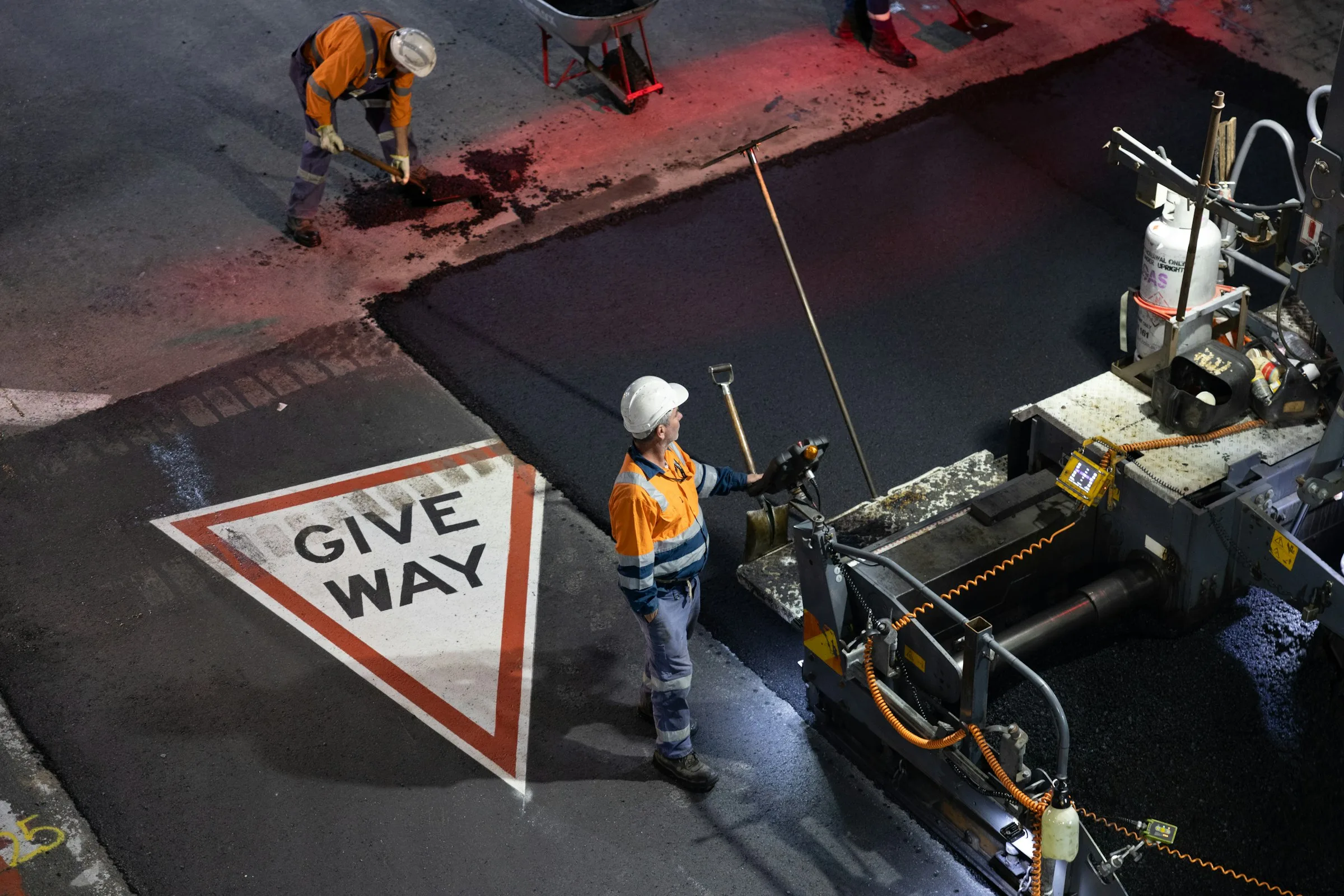
Hot mix asphalt (HMA) costs $100 to $150 per ton for material in 2026, with a national average of about $115 to $125 per ton. Price shifts hard by mix type: cold mix runs $80 to $130, warm mix $110 to $160, porous $130 to $200, colored $150 to $250, and recycled millings $10 to $55. Polymer-modified and Superpave/PG-graded mixes cost more than standard HMA, but no supplier publishes a flat national price for either, since the premium depends on the specific binder grade your climate and traffic load actually require.
How much does asphalt cost per ton in 2026?
Standard hot mix asphalt costs $100 to $150 per ton for material in 2026, with a national average of roughly $115 to $125 per ton, the plant-gate price before delivery or installation. That price moves with crude oil and with region, but the biggest lever most cost guides skip is mix type, covered in full below.
Asphalt price per ton by mix type (2026)
Asphalt is not one product with one price. Plants sell several distinct mixes, and the type you order for a driveway is a different product, at a different price, than what a contractor orders for an airport runway or a winter pothole patch.
| Mix type | Price per ton (material) | Best for |
|---|---|---|
| Hot Mix Asphalt (HMA) | $100 to $150 | Driveways, parking lots, roads — the default choice |
| Warm Mix Asphalt (WMA) | $110 to $160 | Cooler-weather installs, longer hauls from the plant |
| Cold Mix Asphalt | $80 to $130 | Pothole repair, patching, temporary fixes |
| Porous Asphalt | $130 to $200 | Drainage-sensitive lots and driveways |
| Polymer-Modified Asphalt (PMA) | Premium over standard HMA* | High-traffic roads, airports, heavy-load lots |
| Superpave / PG-graded mixes | Priced by required binder grade, not a flat premium** | Mixes engineered for local climate extremes |
| Recycled Asphalt (RAP / millings) | $10 to $55 | Budget base layers, rural driveways |
| Colored Asphalt | $150 to $250 | Decorative drives, walkways, bike paths |
*Suppliers don't quote a single national price for polymer-modified asphalt (PMA) the way they do for standard HMA. The added cost comes from the polymer modifier itself, plus extra blending and quality-control time at the plant. Expect a real premium over standard HMA rather than a fixed percentage. PMA shows up on projects where the surface has to survive heavy, slow-turning, or high-frequency loads: airport aprons, bus lanes, intersections, and industrial lots. Get a local quote before budgeting one into a project.
**Superpave is a mix-design and binder-selection method, not an automatically pricier product, according to Pavement Interactive's technical reference on performance grading. It replaced the older Marshall mix design method nationwide, and every Superpave mix gets specified with a PG, or Performance Grade, binder rated for the local climate's high and low pavement temperatures. Cost only climbs when that climate demands a wide-spread PG binder. PG 76-22 is a common example, used in regions with big swings between summer heat and winter cold. That wide a spread usually forces the same kind of polymer modification PMA uses, which is where the added cost actually comes from. A Superpave mix designed for a mild, narrow-spread climate can call for a PG grade like PG 58-28 that needs no modification at all, and price close to standard HMA. One designed to survive Minnesota winters and Texas summers will not, and that distinction, PG grade driving cost rather than the word "Superpave" itself, is what most cost guides skip when they quote it as one flat number.
In practice, most residential and light-commercial jobs never need to ask about either one. Standard HMA is engineered for ordinary passenger and light-truck traffic across a normal climate range. PMA and high-PG Superpave mixes earn their premium on the surfaces where standard HMA fails early: airport pavement under repeated aircraft tire pressure, bus lanes taking the same braking stress thousands of times a day, or a region swinging 100°F or more between seasons. If a spec sheet or contractor calls for one without a condition like that present, ask why.
Asphalt price per ton by mix type (2026, material only)
Most residential and commercial jobs use standard HMA. If a supplier quotes you well outside the $100 to $150 range for it, ask what mix they are actually pricing, because a WMA, PMA, or Superpave quote dressed up as "asphalt" can look like a bad HMA price when it's really a different product.
Why mix type moves the price so much
Two things inside the mix drive most of the price gap between types: the binder grade and the aggregate.
The binder is the petroleum-based glue holding the aggregate together, and plain binder is cheap relative to a modified one. Polymer modification, the step that makes PMA and high-PG Superpave mixes cost more, adds specialty additives and extra plant processing time before the binder ever touches the aggregate. That is a real manufacturing cost, not a markup, which is why suppliers price it as a premium instead of a flat add-on.
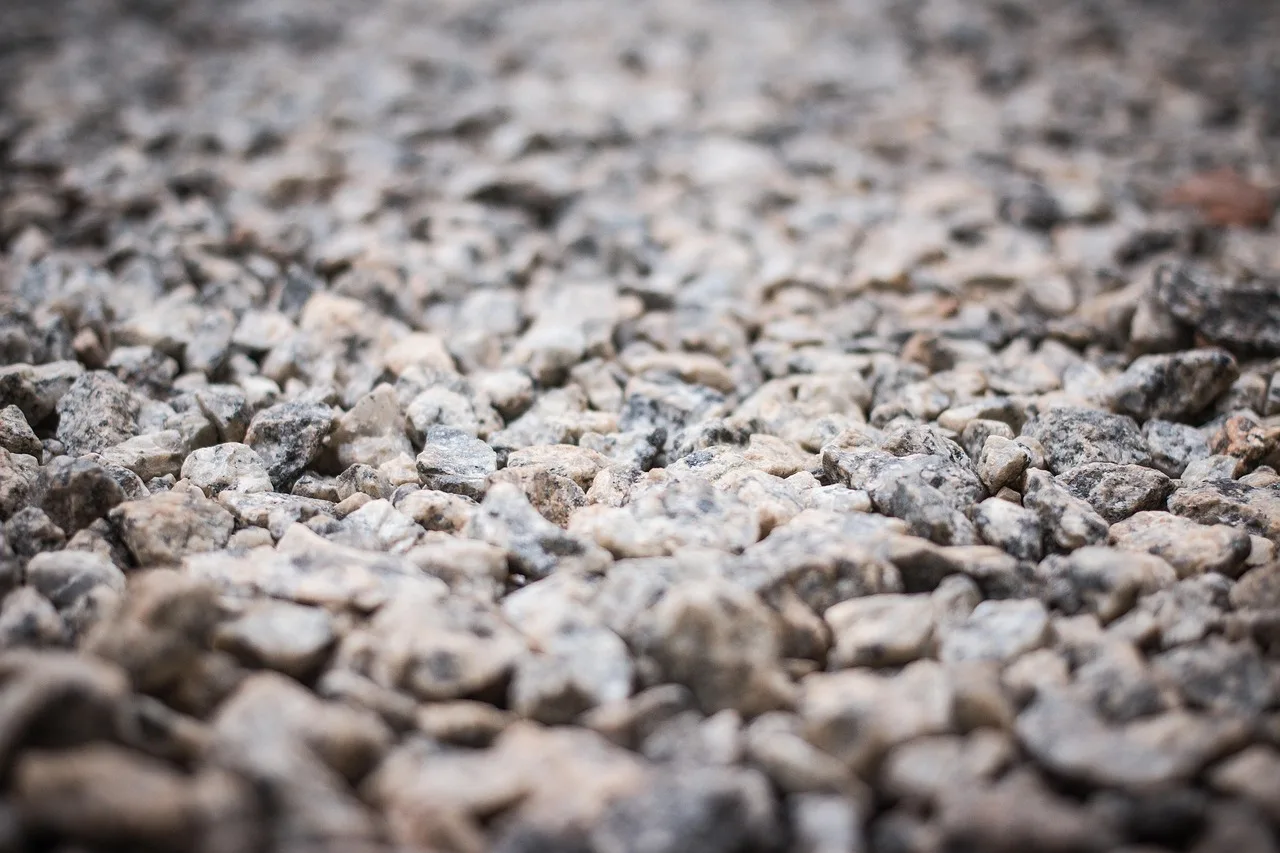
The aggregate, the crushed stone that makes up 92% to 96% of a ton of HMA by volume (Asphalt Institute MS-2 mix design manual), plays a smaller but real role too. Harder stone like granite generally costs more to quarry and crush than softer, more locally abundant stone like limestone, and it often has to travel farther depending on your region's geology. The gap varies too much by location to quote one national number, so ask your supplier what aggregate they use and whether a cheaper local source is available for your job.
Material-only vs. delivered vs. self-haul pricing
Every price on this page so far is the plant-gate price: material only, picked up or already loaded, before it leaves the plant. Three other pricing structures show up once you factor in how the asphalt actually gets to your job site.
- Plant gate (material only): the base $100 to $150 per ton for HMA. What you pay if you or your contractor haul it yourselves.
- Delivered: plant-gate price plus $4 to $10 per ton within 15 to 20 miles. Beyond that, fuel surcharges climb fast, because hot mix has to stay above 275°F in transit or it starts to cool and lose workability before it can be laid.
- Self-haul / pickup: the cheapest route on paper, but only workable if you own or can rent an insulated dump trailer, since regular open trailers let the mix cool too fast on anything but a short drive.
- Fully installed: $7 to $15 per square foot, covering material, labor, base prep, and compaction. This is what a driveway or lot contractor actually quotes you, not the per-ton price.
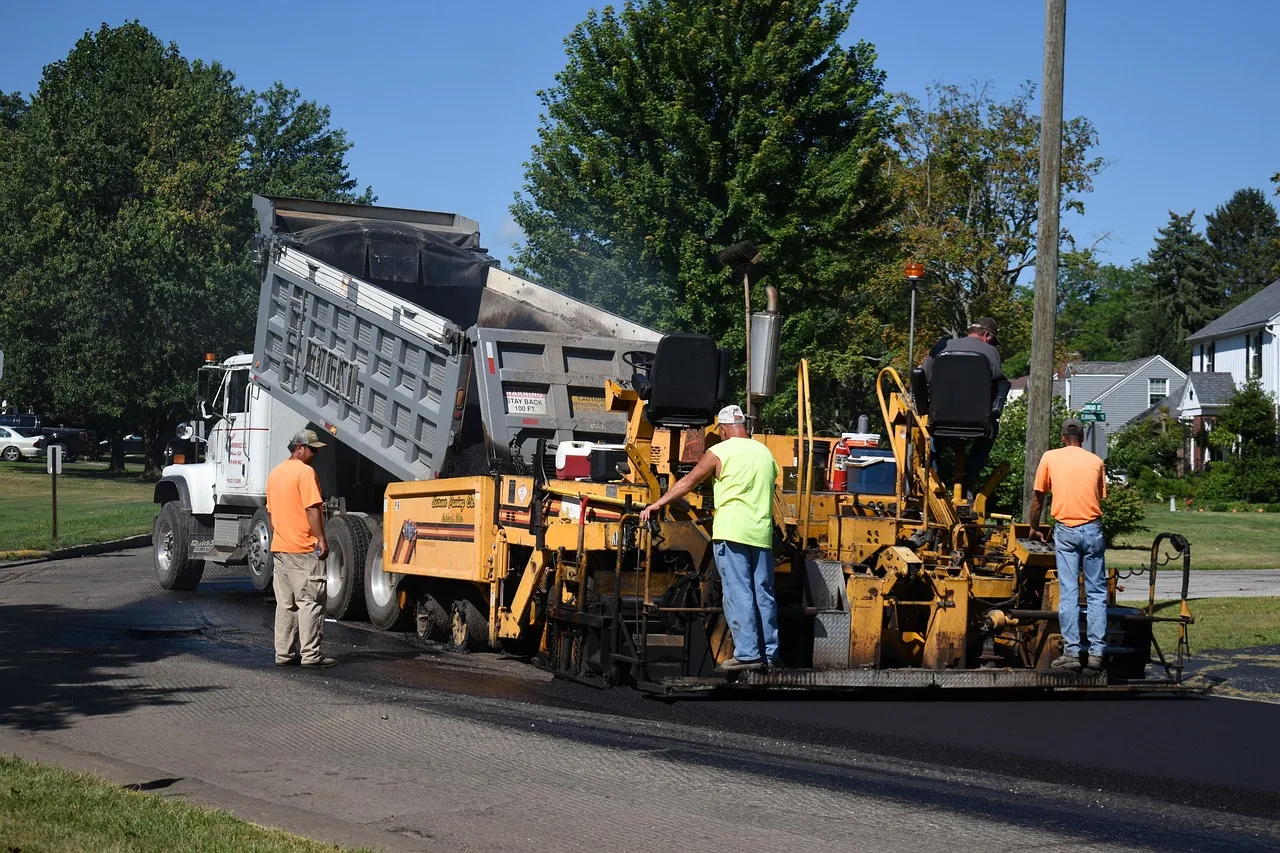
How do you calculate asphalt prices?
- Area (sq ft) × depth (ft) × 145 lb/ft³ ÷ 2,000 = tonnage.
- Tonnage × price per ton = material cost.
- Add delivery ($4 to $10 per ton within 15 to 20 miles).
- Add a 5% to 10% waste buffer for compaction and spillage.
Full formula and worked examples: how to calculate asphalt tonnage, or skip the math with the free asphalt calculator.
How much can 1 ton of asphalt cover?
One ton of standard HMA covers about 55 square feet at the typical 3-inch compacted depth, more at shallower depths and less at deeper ones. Full coverage table by depth: how much does a ton of asphalt cover.
How much is 15 tons of asphalt?
Fifteen tons of standard HMA costs $1,725 to $1,875 for material at the national average of $115 to $125 per ton, plus $60 to $150 for delivery, putting the delivered total around $1,785 to $2,025. That volume covers roughly 825 square feet at 3 inches deep, enough for a mid-size driveway.
At the smaller end of a delivery run, 15 tons is close to what a single tandem truck can carry, so you likely won't need more than one load.
At a glance: asphalt price per ton in 2026
- 1$100 to $150 per ton — the 2026 material-only price range for standard hot mix asphalt (HMA) at the plant gate.
- 2$115 to $125 per ton — the national average for standard HMA, before delivery or installation.
- 3$10 to $55 per ton — recycled asphalt millings (RAP), the cheapest option, suited to base layers and rural driveways, not finished surfaces.
- 4$150 to $250 per ton — colored asphalt, the priciest standard option, used for decorative drives and paths.
- 5No flat national price — for polymer-modified or Superpave/PG-graded mixes. Both price as a premium over standard HMA that depends on the binder grade your project actually needs.
Sources and citations
- National Asphalt Pavement Association — asphaltpavement.org
- Asphalt Institute — asphaltinstitute.org
- Pavement Interactive, "Superpave Performance Grading" — pavementinteractive.org
- Asphalt Price Index (internal, region and state pricing)
- Asphalt Cost Calculator (internal tool)
- Asphalt Driveway Cost Calculator (internal tool)
Frequently asked questions
One ton of standard hot mix asphalt (HMA) costs $100 to $150 for material in 2026, with a national average of about $115 to $125 per ton at the plant gate. The exact price depends on your region, how far the material has to travel, and whether you need standard HMA or a specialty mix like polymer-modified or porous asphalt.
The current national average for standard hot mix asphalt is about $115 to $125 per ton in 2026, material only, before delivery or installation. Gulf Coast states typically land near the low end of the $100 to $150 range, while the Northeast and West Coast run closer to the top.
If you're pricing in metric tonnes rather than US short tons, standard hot mix asphalt runs roughly $110 to $165 per metric tonne in 2026 (a metric tonne is about 2,205 lb versus 2,000 lb for a US ton, so the per-tonne price runs about 10% higher than the per-ton price). Always confirm which unit a supplier is quoting before comparing prices.
Multiply the area in square feet by the depth in feet, multiply by 145 (the standard compacted density in lb/ft³), and divide by 2,000 to get tonnage. Multiply that by your local price per ton, then add delivery and a 5% to 10% waste buffer. For example, 800 square feet at 3 inches needs about 14.5 tons, which runs roughly $1,815 in material at $125 per ton.
One ton of hot mix asphalt covers about 55 square feet at the standard 3-inch compacted depth, 83 square feet at 2 inches, or 41 square feet at 4 inches. Coverage drops as depth increases because a thicker layer uses more material over the same area.
Polymer-modified asphalt (PMA) costs more because the polymer additives themselves aren't cheap, and blending them into the binder takes extra time and quality control at the plant. That added cost is why PMA shows up mainly on projects that need to survive heavy or slow-turning loads, like airport aprons and bus lanes, rather than a standard residential driveway.
No. Superpave is a mix-design and binder-selection method, not a product that's inherently pricier. Cost only rises when your local climate requires a wide-spread PG (Performance Grade) binder, such as PG 76-22 for areas with extreme summer-to-winter temperature swings, because that spread typically forces the same kind of polymer modification used in PMA. A Superpave mix built for a mild climate can price close to standard HMA.
Recycled asphalt millings (RAP) are the cheapest at $10 to $55 per ton, well below standard HMA's $100 to $150. They work as a budget base layer or rural driveway surface, but they don't match the durability or finished look of new hot mix. See the full breakdown in our guide to asphalt millings cost.